Quick answer
BPC-157 is the more proven peptide for soft tissue repair (tendons, ligaments, gut). GHK-Cu is stronger for collagen synthesis and skin/connective tissue quality. For joint pain specifically, BPC-157 produces faster symptom relief; GHK-Cu works slower but supports underlying collagen integrity. Many users stack both during acute recovery, then taper to GHK-Cu only for maintenance.
BPC-157 and GHK-Cu are research peptides. Neither is FDA-approved for human therapeutic use. This guide summarizes mechanism, dosing, and community-reported patterns. It is not medical advice.
The Question Everyone Asks About These Two Peptides
Anyone who has spent ten minutes in a peptide forum has seen the same question. Knee that will not quiet down, shoulder that clicks after every workout, an old ligament tear that never fully closed. The answer is always one of these two. So which one. The truth is they do different things, and the smart move is usually not to pick, but to understand what each is for and use them accordingly.
How BPC-157 Actually Works (in Plain English)
BPC-157 is a 15-amino-acid fragment of a protein originally isolated from gastric juice. The mechanism most relevant to joints: it upregulates growth hormone receptor expression in tendons and ligaments, increases blood vessel formation around injury sites, and modulates the nitric oxide pathway that controls local blood flow. The practical translation: it accelerates the body’s own repair signal in soft tissue that is otherwise slow to heal because of poor blood supply.
How GHK-Cu Actually Works (in Plain English)
GHK-Cu is a copper-binding tripeptide (glycine-histidine-lysine) that occurs naturally in human plasma. Its primary mechanism is upregulating collagen and elastin synthesis, modulating matrix metalloproteinases (the enzymes that break down collagen), and acting as a copper chaperone that activates antioxidant and tissue-remodeling pathways. The practical translation: GHK-Cu does not directly heal a tear; it improves the quality of the tissue your body is building.
For Acute Joint Pain: Which Works Faster
BPC-157. Reports consistently show meaningful reduction in pain and stiffness within 1 to 3 weeks of starting a 250 to 500 mcg daily protocol. The signal comes from the increased angiogenesis around the inflamed area combined with anti-inflammatory effects on the local cytokine environment. GHK-Cu can absolutely contribute, but it works on a slower timeline because collagen turnover happens over weeks, not days.
For Long-Term Joint Health: Which Lasts
GHK-Cu. The collagen synthesis effect compounds over months of consistent use. Users who run GHK-Cu in cycles for joint maintenance report incremental gains in joint feel, skin quality, and recovery from training that hold even off cycle. BPC-157 is more of an acute repair tool: it accelerates a healing process, but once the tissue is repaired, continuing it has diminishing returns.
Dosing Protocols Compared
| Property | BPC-157 | GHK-Cu |
|---|---|---|
| Primary use | Soft tissue and gut repair | Collagen synthesis, skin |
| Joint pain relief speed | Days to weeks | Weeks to months |
| Typical route | Sub-Q injection (or oral) | Sub-Q injection or topical |
| Typical dose | 250 to 500 mcg/day | 1 to 2 mg/day |
| Cycle length | 4 to 12 weeks | 4 to 8 weeks |
| Evidence base | Animal studies plus anecdotal | In vitro plus topical RCTs |
| Cost (monthly est.) | $40 to $80 | $30 to $60 |
| Stacks well with | TB-500, GHK-Cu | BPC-157, oral collagen |
Stacking BPC-157 with GHK-Cu: The Recovery Protocol
A common recovery stack: BPC-157 at 250 to 500 mcg daily plus GHK-Cu at 1 to 2 mg daily for 6 to 8 weeks, run as separate sub-Q injections (not mixed in the same syringe). After the acute phase, drop BPC-157 and continue GHK-Cu on a 4-weeks-on, 2-weeks-off pattern for maintenance. This pairs BPC-157’s fast repair signal with GHK-Cu’s slower structural support. For dose math, use the peptide calculator.
Subcutaneous vs Intramuscular vs Topical: Which Route Matters Where
For BPC-157, sub-Q is the standard. Some users inject closer to the injury site (still sub-Q, not into the joint), with anecdotal but not clinical support for site-proximal injection helping. Oral BPC-157 exists but has lower systemic bioavailability and is most useful for gut-specific issues.
For GHK-Cu, sub-Q injection produces the strongest systemic effect. Topical GHK-Cu (creams and serums) is well studied for skin and works locally, but for joint support the injectable route gives a much stronger collagen-synthesis signal. See the topical GHK-Cu guide for skin-focused use, and the injectable GHK-Cu guide for protocol detail.
What the Evidence Actually Says
Honest framing: most of the BPC-157 evidence is rodent and rat studies, plus a large body of user reports. There are no large human RCTs. GHK-Cu has stronger in vitro evidence and randomized topical trials for skin, but injectable joint outcomes are still mostly mechanistic plus anecdotal. If you want a peptide with the strongest human evidence base, neither one is it. They are both reasonable, low-risk research-use compounds with mechanisms that line up with what users report, but they are not proven the way an FDA-approved drug is proven.
Tracking Joint Recovery in Regimen
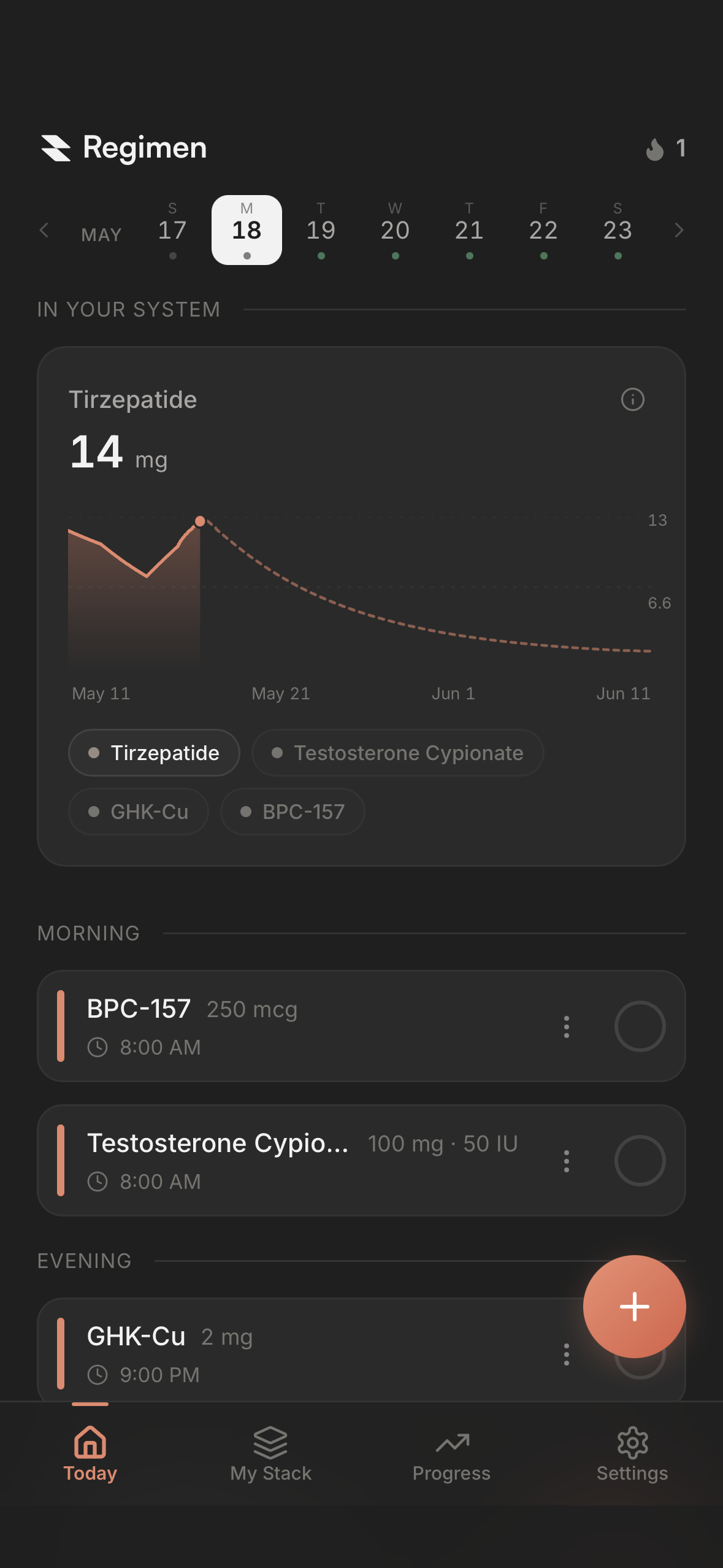
For joint protocols, the markers that actually tell you what is working are simple: pain at rest (1 to 10), pain under load (1 to 10), range of motion, and recovery time after training. Regimen’s 50+ daily markers include all of these, and built-in pattern detection connects them back to your dose schedule so you can tell whether the protocol is moving the needle or whether you should change the dose or stack. For background on what to track day to day, see the peptide tracker app comparison, and for full-stack recovery context, the BPC-157 + TB-500 recovery stack.
Frequently Asked Questions
Is BPC-157 or GHK-Cu better for joints?
BPC-157 for fast acute relief, GHK-Cu for long-term collagen quality. If you have a flared-up joint right now, BPC-157 will give you a faster signal. If you want durable joint health over months, GHK-Cu is the better tool. Most users who run both stack them during recovery and taper to GHK-Cu only for maintenance.
Can I stack BPC-157 and GHK-Cu?
Yes, and it is one of the most common recovery stacks. Inject as two separate sub-Q shots (not mixed in the same syringe). A typical run is 4 to 8 weeks of both, then continue GHK-Cu on a cycled basis for maintenance.
How long does it take BPC-157 to work for joint pain?
Most users report a noticeable reduction in pain or stiffness within 1 to 3 weeks at 250 to 500 mcg daily. If you see nothing after 4 weeks at a consistent dose, the protocol probably is not the right match for that injury, or the dose is too low.
Does GHK-Cu help with osteoarthritis?
The mechanism is supportive (collagen synthesis, anti-inflammatory effects, copper-mediated antioxidant pathways), and many users report meaningful improvement in joint feel over a multi-month run. Direct osteoarthritis RCTs in humans are limited. It is a reasonable tool to try; it is not a cure.
Should I inject or use topical GHK-Cu for joints?
Inject. Topical GHK-Cu is excellent for skin and works locally where you apply it. For systemic collagen synthesis (which is what joints need), sub-Q injection produces a much stronger signal. Save the topical for skin and surface use.
Is BPC-157 oral as effective as injection?
For gut-related issues, oral may be as good or better, because the peptide acts locally on the GI tract before systemic absorption. For tendon, ligament, and joint repair, injection is the more reliable route. Sublingual versions exist but have inconsistent bioavailability.
How do I cycle BPC-157 and GHK-Cu together?
A common protocol: 6 to 8 weeks of BPC-157 (250 to 500 mcg/day) plus GHK-Cu (1 to 2 mg/day) during acute recovery, then drop BPC-157 and run GHK-Cu on a 4-weeks-on, 2-weeks-off pattern for maintenance. Reassess pain and function every 4 weeks and adjust dose or cycle based on what your tracker is telling you.
Ready to track your protocol?
- Smart reminders so you never miss a dose
- Track weight, photos, and progress over time
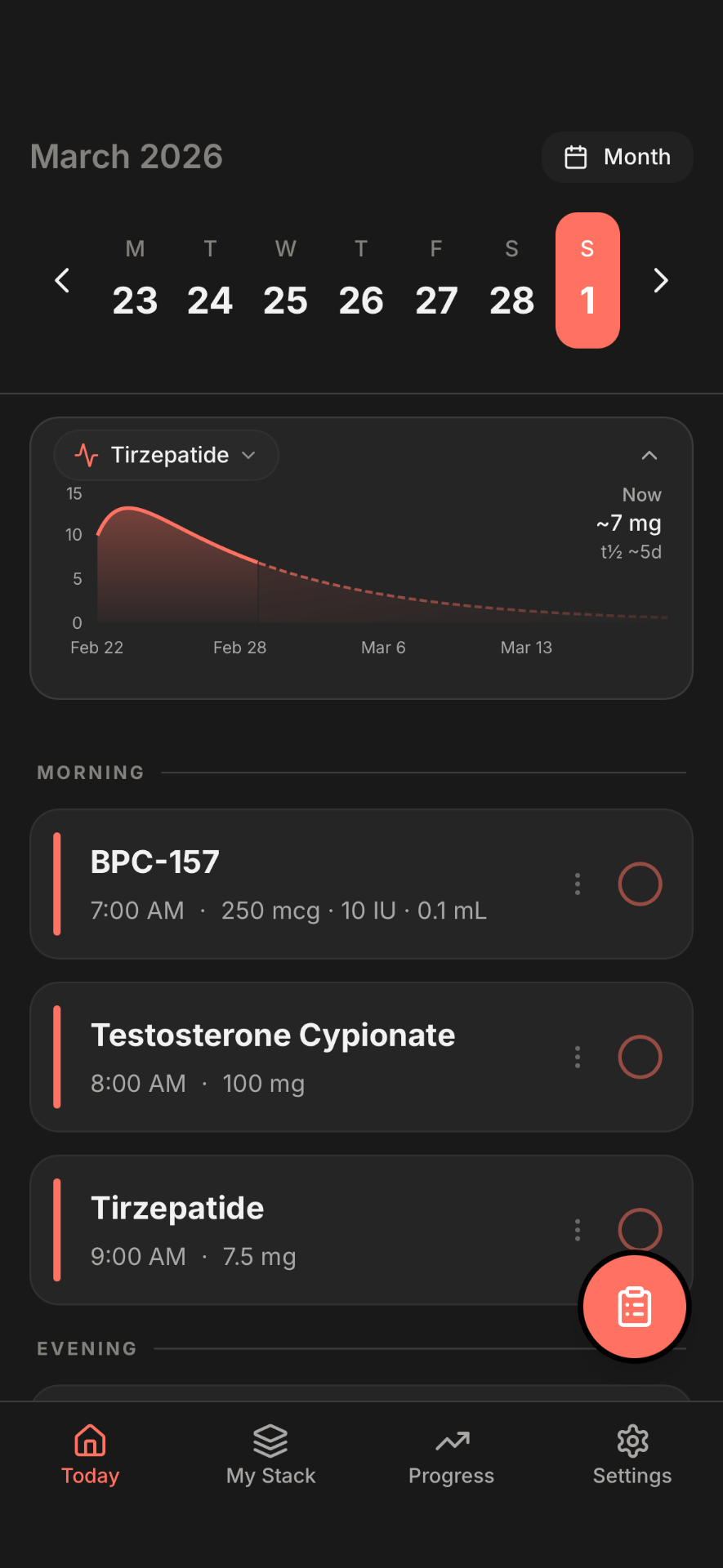
- Medication level curves for every compound