The Bottom Line
The first Mounjaro pen is the 2.5mg starter dose. It’s a tolerance-building dose, not a therapeutic one, so you may not see significant weight loss yet. From week one, log injection day and time, evening nausea on a 1 to 10 scale, morning energy, and any change in cravings. Patterns show up by week 3 to 4, not week 1. Don’t panic if the scale doesn’t move yet, and don’t trust week-one numbers as a trend.
This is educational content, not medical advice. Always work with your prescribing clinician.
You picked up the Mounjaro pen on Friday, watched the pharmacist demo the injection technique, and now you’re staring at week one wondering what to actually pay attention to. The good news: most of week one is signal collection, not symptom management. The patterns you log this week become the baseline your prescriber compares against at every follow-up.
Is the 2.5mg starter dose supposed to feel like nothing?
For a lot of people, yes. The 2.5mg dose is sub-therapeutic for weight loss in most patients. Lilly designed the titration ladder this way on purpose. The first dose introduces your body to tirzepatide so that the step up to 5mg, 7.5mg, and beyond is tolerable. If you feel almost nothing in week one, that’s well within the expected range, not a sign the medication isn’t working.
Why don’t I see weight loss yet?
Tirzepatide works through appetite suppression and delayed gastric emptying. Both effects ramp with dose. At 2.5mg, most people aren’t eating dramatically less yet, so weight on a scale moves mostly with water and waste, not fat. Visible weight-loss trends on a 4-week moving average usually show up between weeks 6 and 8 for most patients.
What side effects are normal in week one?
The common ones, in rough order of frequency: mild nausea, fatigue, slight constipation, occasional reflux, and reduced appetite. They’re usually mild at 2.5mg and often peak in the 24 to 48 hours following the injection.
What’s not in the “normal week-one” bucket: severe abdominal pain, persistent vomiting, signs of dehydration, yellowing of the skin or eyes, or any allergic reaction (swelling of face, lips, or tongue). Those warrant a call to your prescriber or, in the case of allergic reaction or severe abdominal pain, urgent care.
How do I remember which day I injected?
Sounds trivial; isn’t. By week three, “did I inject Saturday night or Sunday morning” becomes a real question, and getting it wrong means either an underdose or stacking doses too close together. The fix is to log the moment you do it, not later. The pen, the day, the time, and (optionally) the injection site go in the log right after the injection.
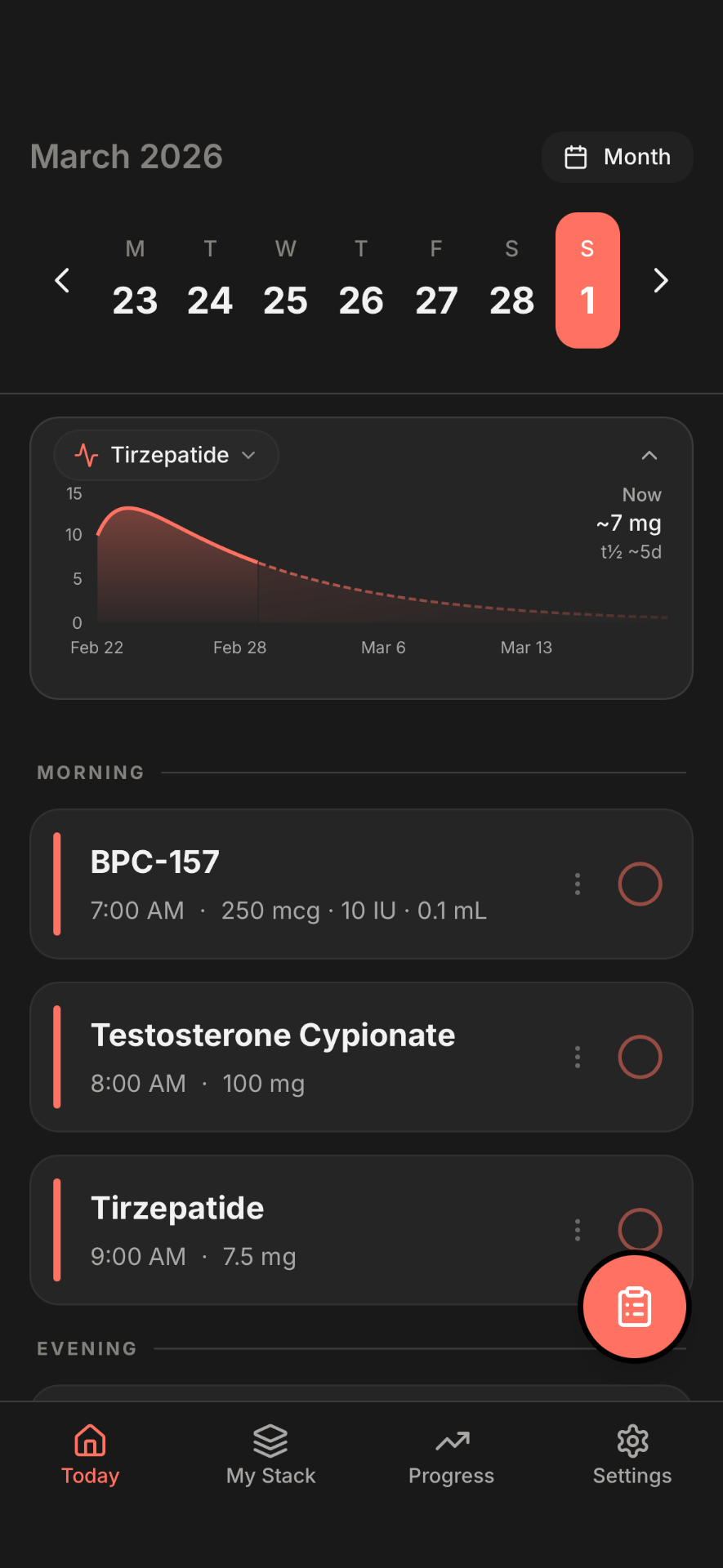
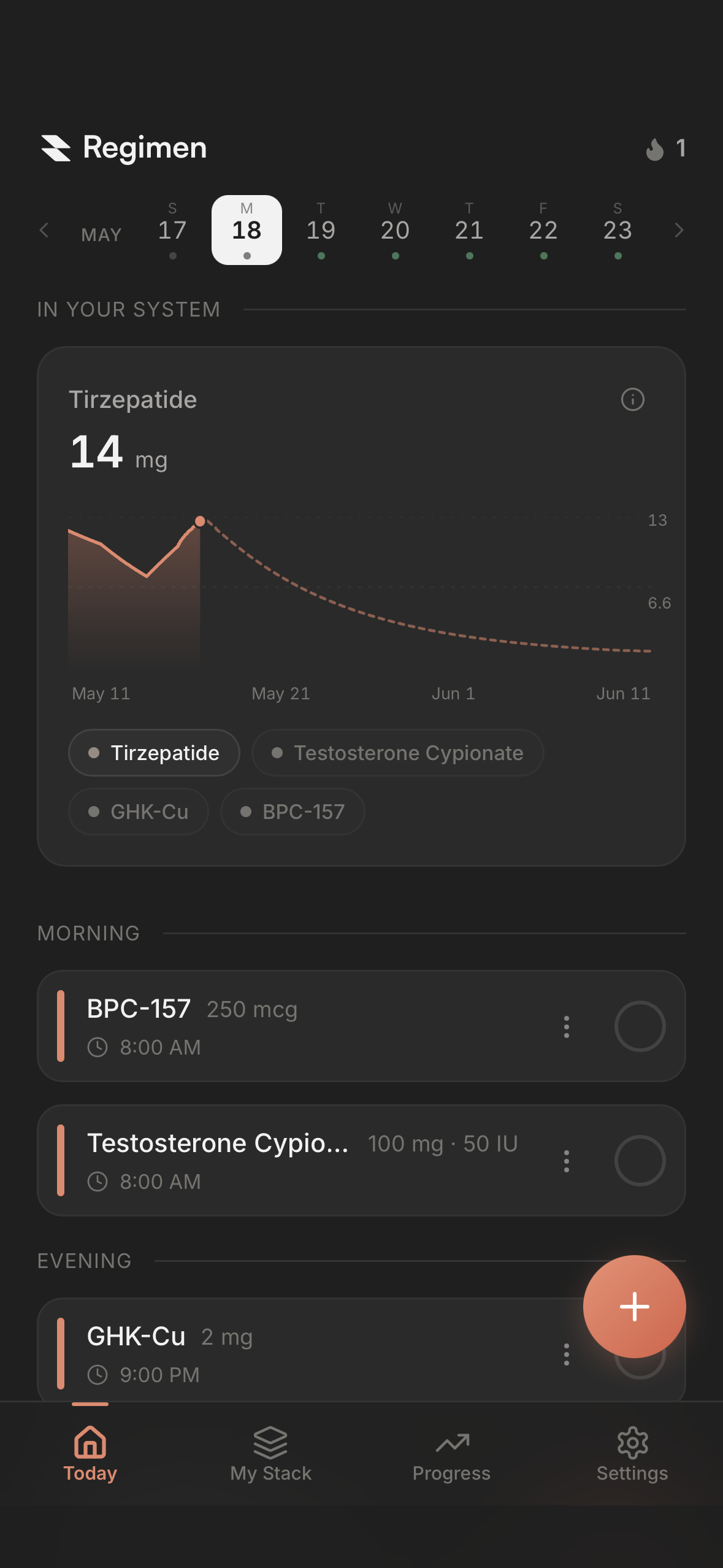
A tracker like Regimen handles dose logging plus the next-dose reminder in one step. If you don’t want an app, a wall calendar with a check mark also works. What doesn’t work: relying on memory.
When should I tell my doctor about side effects?
Anything in the prescribing information’s “tell your healthcare provider” list warrants a call. Specifically: severe stomach pain (especially radiating to the back), persistent vomiting, signs of dehydration, vision changes, severe constipation that doesn’t resolve, mood changes, or any allergic reaction symptoms.
For the milder stuff, the rule of thumb is: if it’s affecting your ability to eat, drink, work, or sleep, it’s worth a call even if it doesn’t feel “emergency-level.” Your prescriber would rather hear about it early than at week 12.
What’s the difference between Mounjaro and Zepbound?
Same molecule, tirzepatide. Same manufacturer, Eli Lilly. Different FDA-approved indication. Mounjaro is approved for type 2 diabetes; Zepbound is approved for chronic weight management. The pens are visually different, but the active ingredient and titration ladder are identical. Insurance coverage usually differs significantly between the two indications.
What should I actually log?
Five data points cover most of what matters in week one:
- Injection day, time, and dose. Logged the moment you do it.
- Evening nausea or GI severity, 1 to 10. Same scale, same time of day.
- Morning energy, 1 to 10. Tirzepatide can cause fatigue; the pattern matters.
- Appetite or cravings, qualitative note. “No interest in dinner” or “lost the urge to snack at 9pm” is the kind of pattern that becomes meaningful by week 4.
- Weekly weight, same conditions. Morning, post-bathroom, pre-meal, same scale.
That’s enough. The “track 50 markers” approach is the most common reason new GLP-1 users abandon tracking within two weeks. Less is more in week one.
Frequently Asked Questions
How much weight do most people lose in week one on Mounjaro?
Most people see little to no fat loss in week one. The 2.5mg dose isn’t designed to produce significant weight loss. Trend lines become meaningful around weeks 4 to 8 as the dose escalates.
Can I inject Mounjaro at any time of day?
Yes. Once-weekly, any time of day, with or without food. Pick a time that’s easy to remember and consistent. Many people pick a low-activity evening (Sunday is common) so they’re not driving or working if mild nausea hits.
Do I need to change my diet in week one?
Major changes aren’t necessary, but smaller meals tend to feel better than large ones because of the delayed gastric emptying. High-fat meals are the most common trigger for nausea and reflux. Lots of water helps.
What if my appetite doesn’t change at all on the starter dose?
That’s common. Appetite suppression typically shows up around the 5mg or 7.5mg step. If by week 8 to 12 you’ve titrated up and still see no appetite change, that’s worth raising with your prescriber.
Is Mounjaro a once-and-done medication?
No. It’s a chronic treatment. When patients stop tirzepatide, most regain a significant portion of lost weight within a year. Long-term planning matters; talk to your prescriber about maintenance dosing.
Related reading
Ready to track your protocol?
- Smart reminders so you never miss a dose
- Track weight, photos, and progress over time
- Medication level curves for every compound