Short answer: yes. There’s solid trial evidence that GLP-1s lower inflammation, and the interesting part is that some of it looks separate from the weight you lose. Here’s what the studies found, why it happens, and the one blood marker you can track to see it for yourself.
Quick answer
GLP-1 medications like semaglutide and tirzepatide (tirz) meaningfully lower inflammation in your body. In the SELECT trial, semaglutide dropped hs-CRP, the main inflammation marker, by about 38% versus placebo.
The twist worth knowing: a chunk of that drop happened early, before people had lost much weight. So it’s not only “thinner body, calmer system.” The drug seems to quiet inflammation somewhat on its own.
And there’s one thing you can actually track: a blood test called hs-CRP. If you’re on a GLP-1, your number is very likely already falling. You just have to look for it.
What “inflammation” actually means here
Quick reset, because the word gets thrown around a lot.
We’re not talking about a swollen ankle. This is chronic, low-grade inflammation. The quiet, body-wide kind that doesn’t hurt and doesn’t show up as anything you’d notice day to day.
Think of it as background static in your system. Extra fat tissue, especially around your organs, acts like it’s always slightly irritated and keeps sending out low-level alarm signals. Over years, that background static is linked to heart disease, insulin resistance, and other things you’d rather avoid.
You can’t feel it. But you can measure it. That’s the whole reason this is worth caring about.
The trial data: what GLP-1s actually did to inflammation
This is the good part, because we have real numbers from real trials.
Semaglutide, SELECT trial. This was the big one: around 17,600 people followed for years. Semaglutide lowered hs-CRP by roughly 38% compared to placebo (37.8%, if you want the exact figure) by week 104. Starting point was about 1.87 mg/L, which is already in the range where doctors start paying attention.
The surprising part. The CRP drop showed up early, while people had lost only a modest amount of weight. If inflammation were purely a weight thing, the marker wouldn’t move until the pounds did. It moved sooner. That points to a weight-independent effect, meaning the drug is doing something to inflammation directly, not only as a byproduct of you getting smaller.
PIONEER-2 makes this even cleaner. In this trial of oral semaglutide, people saw about a 30% CRP reduction even though weight loss was only around 4%. Small weight change, big inflammation change. That gap is the clearest hint that the medication has its own anti-inflammatory action.
Tirzepatide, SURMOUNT trials. Same story from a different drug. Post-hoc analysis showed hs-CRP dropping by roughly 25 to 40%, and the effect got bigger at higher doses. Early on it looked weight-independent, and by week 72 more of it tracked with the weight loss.
So across different GLP-1s, different trial designs, and tens of thousands of people, the direction is the same. Inflammation goes down. Part of it is the weight. Part of it isn’t.
Why this happens (the plain-English version)
So how does a shot you take for appetite end up quieting inflammation? A few things are going on at once.
It turns down the alarm signals. Your body makes messenger molecules that tell your immune system to stay switched on. Two of the loudest are TNF-alpha and IL-6. GLP-1s lower both. Fewer alarm messages, calmer system.
It shuts a specific inflammation switch. There’s a molecular trigger called the NLRP3 inflammasome. Think of it as a smoke detector that’s gotten too sensitive and keeps going off when there’s no real fire. GLP-1s help keep that detector from firing so easily. Same idea with a signaling pathway called NF-kB, which is basically the master “start inflammation” button.
It patches up your gut lining. This is the one most people haven’t heard. When your gut lining gets leaky, bits of bacteria slip into your bloodstream and your immune system reacts, which drives inflammation. GLP-1s help tighten that lining back up. Less leaking, less immune reaction, less inflammation.
Put it together and you get the picture. Less fat sending out alarm signals, the drug directly dialing down several inflammation pathways, and a better-sealed gut. That’s why the CRP number moves even before the scale does much.
The one marker you can actually track: hs-CRP
Here’s the part that turns all this into something you can use instead of just read about.
hs-CRP stands for high-sensitivity C-reactive protein. It’s a cheap, common blood test that measures the background inflammation we talked about. The “high-sensitivity” version is the one you want, because it can read the low levels that matter for heart and metabolic health.
Rough way to read your number:
| hs-CRP level | What it generally suggests |
|---|---|
| Under 1.0 mg/L | Low inflammation |
| 1.0 to 3.0 mg/L | Moderate |
| Over 3.0 mg/L | Higher |
These are the standard AHA/CDC reference ranges. Your doctor interprets your number in context, and this is not a target to chase on your own.
Plenty of people aim for under 1.0, and some push for under 0.5 if they’re really tuning things.
If you want the fuller picture, a couple of secondary markers ride along with it: homocysteine, IL-6, and ESR. But hs-CRP is the one to anchor on. It’s the marker the big trials used, it’s easy to order, and it actually moves.
Here’s the catch. One reading tells you almost nothing. CRP bounces around if you’re fighting a cold, sore from a workout, or just had a rough couple of days. The signal is in the trend across several tests over months, not any single number.
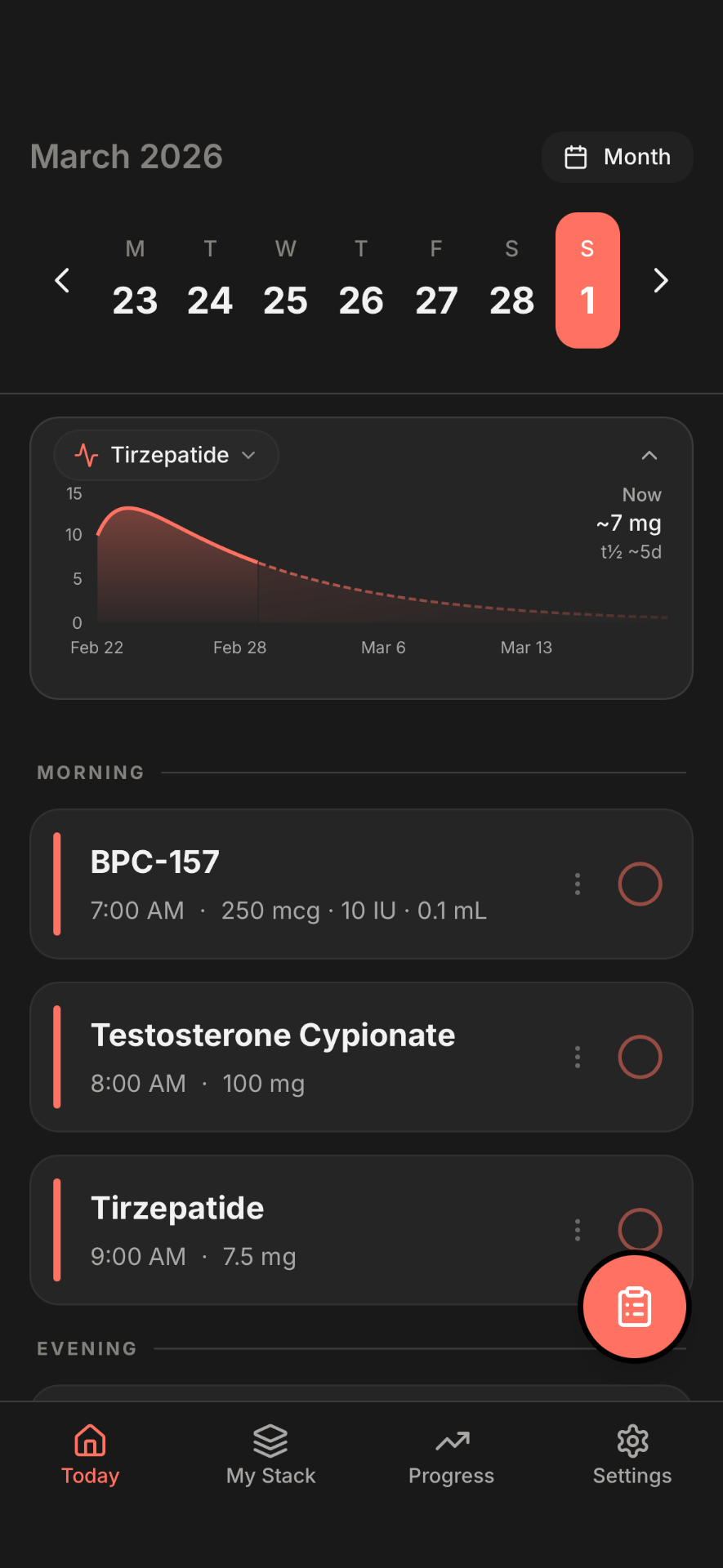
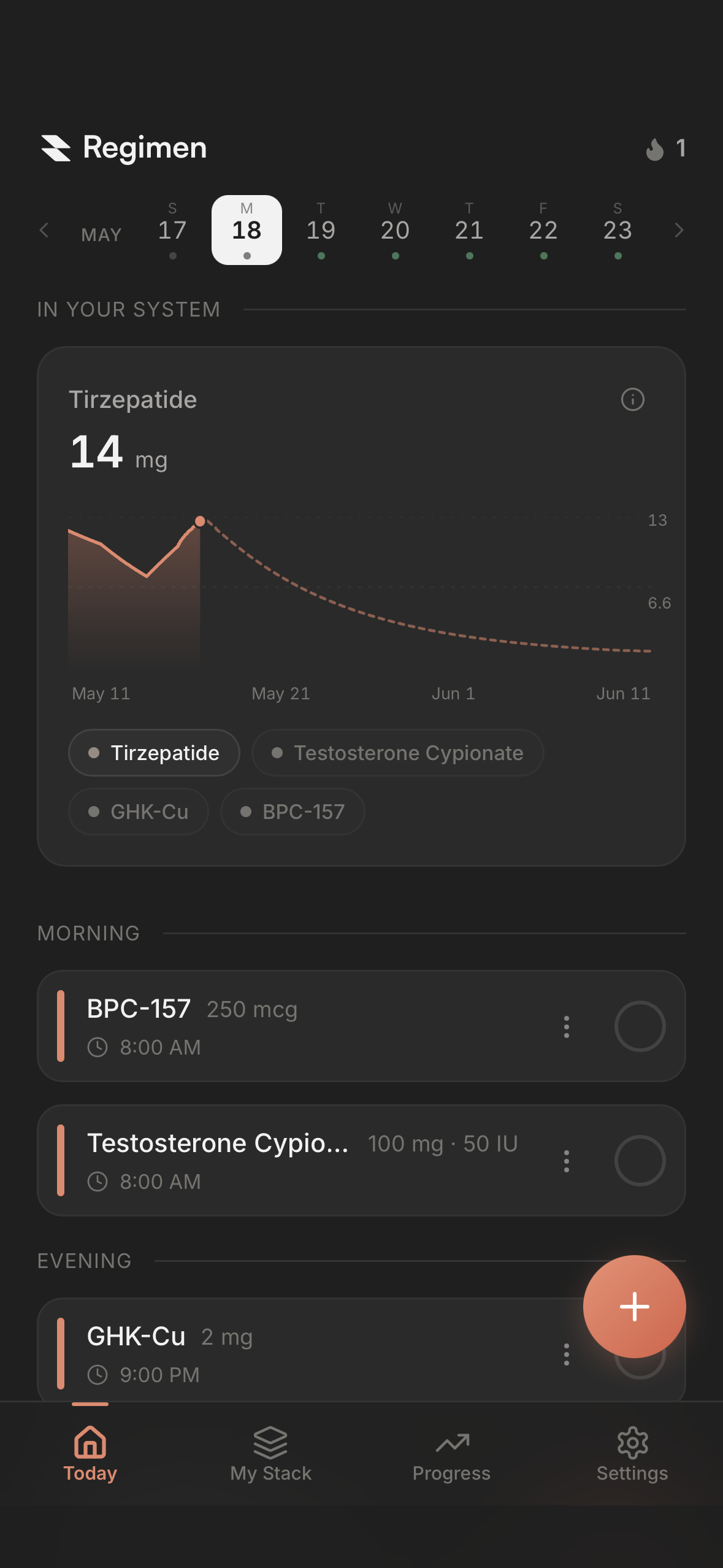
This is exactly where Regimen earns its place. Instead of you trying to remember what last quarter’s result was, Regimen connects your GLP-1 to your lab work and your daily markers over time, and its built-in pattern detection surfaces what’s actually moving. You log your hs-CRP, keep taking your shot, and watch the line trend down across months. The single number stops being noise. The pattern becomes the point.
Whether to order hs-CRP, and what to make of your result, is a conversation with your doctor. It’s a normal test to ask for. Just don’t change anything about your regimen chasing a number.
The reframe: your GLP-1 is a metabolic-health drug
This is the shift worth sitting with.
You’ve probably been thinking of your shot as a weight-loss drug. Reasonable. That’s how it’s marketed and that’s why most people start.
But look at what it’s actually doing. Lower inflammation. The heart and kidney signals from the trials. Better blood sugar handling. Weight loss is one output. It isn’t the whole machine.
A more accurate frame: this is a metabolic-health medication that happens to produce weight loss along the way. The number on the scale is the visible part. A lot of the real work is happening in bloodwork you’d never see unless you looked.
Which is the whole point of measuring. The scale was never going to show you your CRP falling.
See what your scale can’t show you
Your weight shows up every morning. Your inflammation shows up nowhere unless you go looking for it.
That’s what Regimen is built for. It connects your GLP-1 to your labs and your daily markers, and its built-in pattern detection surfaces what’s actually working, so a marker like hs-CRP turns into a trend line you can watch fall over months instead of a number you’re guessing about. The scale tells you one story. Regimen shows you the bigger one.
Prefer to look around first? See the dedicated GLP-1 tracker.
Frequently Asked Questions
Do GLP-1s reduce inflammation?
Yes. In the SELECT trial, semaglutide lowered hs-CRP (the main inflammation marker) by about 38% versus placebo. Tirzepatide showed similar drops of roughly 25 to 40% in the SURMOUNT trials. The effect is consistent across large studies.
Is it just from losing weight?
Partly, but not entirely. The inflammation marker started dropping early, before much weight came off, and in PIONEER-2 people saw about a 30% CRP reduction with only around 4% weight loss. That points to the drug having a direct anti-inflammatory effect on top of whatever comes from weight loss.
Does this mean GLP-1s treat inflammatory conditions like arthritis?
No, and that’s an important line. GLP-1s lower a measurable inflammation marker in the body. They are not approved to treat arthritis, autoimmune disease, or any inflammatory condition, and this isn’t a reason to use them for those. What the data supports is simpler: if you’re on a GLP-1 for its approved use, your inflammation levels are likely improving as a side benefit.
What blood test shows this?
hs-CRP (high-sensitivity C-reactive protein). It’s cheap, widely available, and it’s the marker the major trials used. Homocysteine, IL-6, and ESR are useful secondary markers, but hs-CRP is the one to track.
How often should I check hs-CRP?
That’s a call for you and your doctor, but the key idea is that one reading isn’t the story. CRP jumps around with illness, injury, and workouts, so what matters is the trend over several tests across months. Always interpret it with your clinician rather than chasing it on your own.
Should I change my dose to lower inflammation more?
No. Don’t change anything about your regimen to chase an inflammation number. The lower CRP is a benefit that comes along with using your medication as prescribed. Any changes are a conversation with your prescriber.
This article is for educational purposes only and is not medical advice. GLP-1 medications carry risks and benefits that depend on your individual health. Always consult a qualified healthcare provider before starting, modifying, or stopping any medication, and about which lab tests are right for you.
Ready to track your GLP-1?
- Smart reminders so you never miss a dose
- Track weight, photos, and progress over time
- Medication level curves for every compound