Verification note: Coverage, eligibility criteria, and pricing for UK health services change frequently. Information here reflects publicly available data as of May 2026. Always verify current NHS access and clinical thresholds at nice.org.uk or nhs.uk before making treatment decisions.
If you are based in the UK and looking into peptides, you are in one of the most accessible markets in the world for this. Research chemical suppliers operate openly and legally here, you can order to your door, and the range available is broader than most comparable countries. Here is how the regulatory framework actually works and what to watch for when choosing suppliers and running a protocol.
The UK Legal Framework for Peptides
Peptides in the UK are not controlled substances under the Misuse of Drugs Act 1971. There is no list of scheduled peptides equivalent to controlled drugs. This is the foundational fact that makes the UK’s peptide market different from many other countries.
The MHRA (Medicines and Healthcare products Regulatory Agency) has issued guidance stating that peptides sold for human use require a medicines licence. But enforcement against individual buyers purchasing for personal research use is effectively zero. UK research chemical suppliers operate openly, advertise publicly, and have been doing so for years without regulatory action against buyers.
The practical result: you can order BPC-157, TB-500, GHK-Cu, Semax, Selank, Epithalon, Thymosin Alpha-1, PT-141, and most other popular peptides from UK-based suppliers and have them delivered to your door. This is legal for the buyer.
What’s Available in the UK
| Peptide | Primary use | UK availability |
|---|---|---|
| BPC-157 | Injury recovery, gut repair, tendon healing | Widely available from multiple UK suppliers |
| TB-500 (Thymosin Beta-4 fragment) | Systemic tissue repair, muscle and tendon healing | Widely available |
| GHK-Cu | Skin collagen, wound healing, hair growth (topical and injectable) | Widely available |
| PT-141 (Bremelanotide) | Sexual function | Available from UK suppliers |
| Semax | Cognitive enhancement, BDNF upregulation, focus | Available from UK and EU suppliers |
| Selank | Anxiety reduction, stress resilience, cognitive balance | Available from UK and EU suppliers |
| Epithalon | Telomere-related longevity protocols | Available |
| Thymosin Alpha-1 | Immune modulation, post-illness recovery | Available |
| MOTS-c | Metabolic, mitochondrial function | Available from specialist suppliers |
| Ipamorelin / CJC-1295 | GH peptide stack, sleep and recovery | Widely available |
| AOD-9604 | Fat metabolism | Available |
The UK biohacking and fitness community is well-established, with active forums and Discord communities where sourcing discussions are common. UK-based suppliers include Peptide Sciences (UK warehouse), and multiple smaller domestic and EU suppliers shipping to the UK.
How to Vet a UK Peptide Supplier
The fact that peptides are legal to buy doesn’t mean every supplier is worth buying from. Product quality varies significantly. Here is what to look for:
Certificate of Analysis (COA): Every legitimate supplier provides a COA with third-party mass spectrometry or HPLC testing confirming identity and purity for each batch. This should be accessible on their website by batch number, not just available ‘on request.’ If it is not public, that is a red flag.
Third-party lab: The COA should be from an independent laboratory, not an in-house test. Check that the lab named on the COA actually exists and does peptide testing commercially.
Sequencing or amino acid analysis: For peptides above a certain molecular weight, some higher-end suppliers provide amino acid sequencing confirmation in addition to purity testing. This is a higher bar of verification.
Website and contact information: A supplier with a professional website, clear contact details, and a physical UK address is preferable. Anonymous suppliers with no traceable company information should be avoided.
Community reputation: UK peptide forums and communities are honest about bad suppliers. Do your research before ordering from an unfamiliar source.
UK Peptide Protocols: The Most Popular Compounds and How They’re Used
BPC-157 (Body Protection Compound 157): The most widely used peptide in the UK fitness and biohacking community. Primarily run for injury recovery (tendon, ligament, muscle), gut healing, and joint pain. Typical protocol: 250-500mcg SubQ or IM once or twice daily, 4-8 weeks on, 2-4 weeks off. Inject as close to the injury site as practically possible for SubQ.
TB-500 (Thymosin Beta-4 fragment Ac-SDKP): Systemic tissue repair, complementary to BPC-157. Typical protocol: 2-2.5mg twice weekly for 4-6 weeks (loading phase), then 2-2.5mg once weekly for maintenance. Often stacked with BPC-157 for serious injuries.
GHK-Cu: Two distinct use cases. Injectable: systemic benefits including wound healing and potential hair growth. Topical serum: most common application for skin (collagen synthesis, fine lines, UV damage repair) and scalp (hair growth, especially when combined with AHK-Cu). No injections needed for the topical route, which makes it accessible to people who aren’t already comfortable with needles.
Semax: Intranasal cognitive peptide. 200-600mcg per dose, 1-2x daily, administered as a nasal spray. Effects: sharper focus, improved working memory, increased motivation. Best used in the morning and early afternoon. The intranasal calculator handles the concentration-to-spray-volume math. See also the guide on Semax vs Selank for choosing between the two.
Selank: Also intranasal. Complementary to Semax: where Semax is activating, Selank is stabilising. Reduces anxiety, improves stress resilience, calms a wired nervous system. 500-1,500mcg per dose intranasally. Can be used in the evenings where Semax cannot.
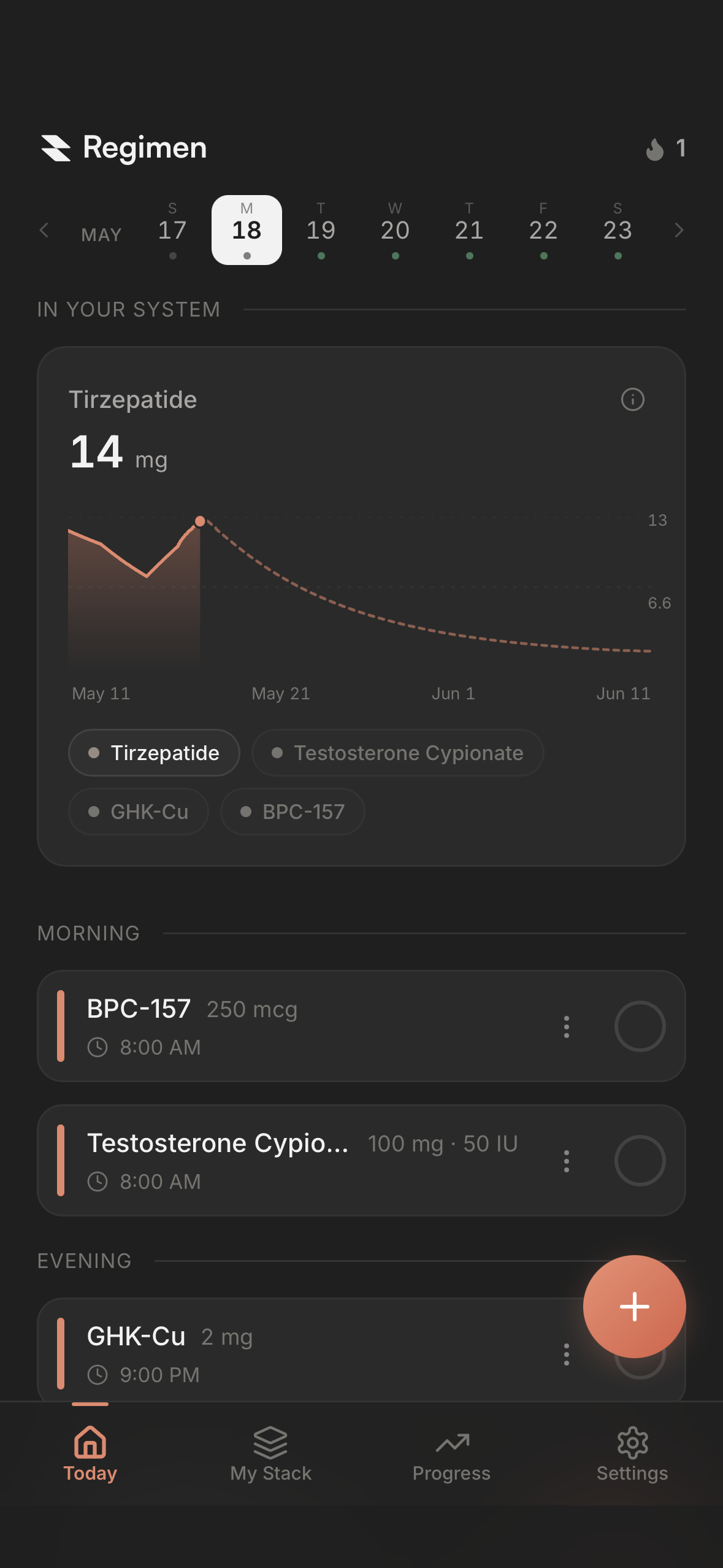
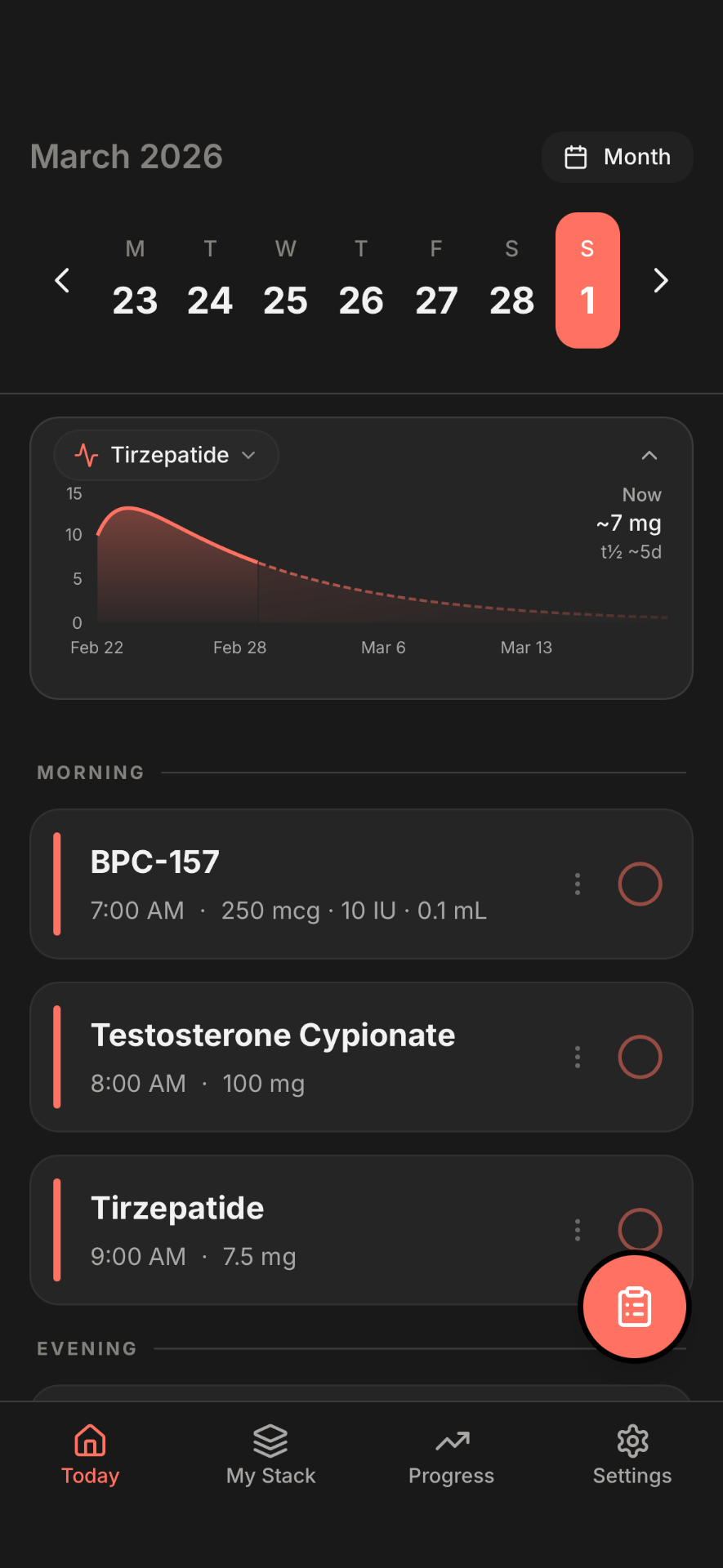
Ready to track your protocol?
- Smart reminders so you never miss a dose
- Progress tracking with photos and weight
- Medication level curves for every compound
Reconstitution and Storage: What UK Buyers Need to Know
Most peptides arrive as lyophilised (freeze-dried) powder in sealed vials. Before using, you need to reconstitute with bacteriostatic water (BAC water with 0.9% benzyl alcohol). Normal sterile water works but degrades faster and has no preservation properties.
Reconstitution steps:
- Let the vial come to room temperature before opening
- Clean the vial cap with an alcohol swab
- Draw the required volume of BAC water into a syringe (use the peptide reconstitution calculator to get the exact volume for your desired concentration)
- Inject the water slowly down the side of the vial. Do not shake.
- Swirl gently until the powder dissolves fully
Storage:
- Unreconstituted powder: -20°C (freezer). Stable for 12-24 months if kept dry.
- Reconstituted solution: 2-8°C (fridge). Use within 30 days. Do not freeze.
BAC water is widely available in the UK from research chemical suppliers and Amazon. Buy it in 30mL multidose vials.
Private Clinics and GP Oversight in the UK
Self-sourcing is the dominant route for UK peptide users. But a growing number of private doctors and functional medicine GPs in the UK are now familiar with peptide protocols and will provide oversight or prescriptions.
Private prescriptions in the UK are rarer for peptides than for TRT, but some anti-ageing and performance medicine clinics in London and major cities do offer supervised peptide protocols. If you want professional oversight, it is worth searching specifically for functional medicine GPs or longevity clinics rather than general private GPs.
How to Get a Peptide Prescription in the UK (the Private Route)
If you want a fully regulated route instead of self-sourcing, the UK has a legal pathway through unlicensed medicines. Under the Human Medicines Regulations 2012, UK doctors can prescribe unlicensed medicines when there is no licensed alternative meeting the patient’s needs, the prescriber takes clinical responsibility, and the medicine is obtained from a licensed UK specials manufacturer or licensed importer. This is how peptides are dispensed through private healthcare in the UK.
| Peptide | UK access route | Notes |
|---|---|---|
| BPC-157 | Private prescription + licensed specials compounder | Increasingly available through UK men’s health and functional medicine clinics |
| TB-500 | Private prescription + licensed specials compounder | Often paired with BPC-157 |
| Semax | Private prescription + licensed specials compounder | Less commonly offered than BPC-157 / TB-500 |
| PT-141 | Private prescription | Available through sexual health-oriented private clinics |
| GHK-Cu (injectable) | Private prescription | Available; often through anti-ageing clinics |
| Ipamorelin / CJC-1295 | Private prescription | Available at some UK longevity clinics |
Step 1 - Find a private provider. UK private GP networks and functional medicine clinics are your access point. Look for clinics that explicitly list peptide therapy or regenerative medicine.
Step 2 - Consultation. Expect a full health history, possibly blood work, and a discussion of your goals. Providers who take this seriously will want to understand why you want the peptide and monitor your response.
Step 3 - Prescription. Your provider writes a prescription for an unlicensed medicine. This is legal in the UK under the Human Medicines Regulations.
Step 4 - Dispensing. The prescription goes to a licensed UK specials manufacturer. These are MHRA-licensed facilities that legally compound unlicensed medicines. Turnaround is typically 5-10 working days.
Indicative cost (varies by clinic): consultations typically fall in the range of £150-400, with the compounded peptide preparation typically £80-250/month depending on the compound, dose, and provider. These are indicative ranges, not fixed prices - costs and availability change frequently, so verify current pricing directly with the clinic before booking.
For the TRT side of your protocol, the UK TRT guide covers NHS access, private clinic costs, and what to expect from both pathways.
Frequently Asked Questions
Are peptides legal to buy in the UK?
Yes. Peptides are not controlled substances under the Misuse of Drugs Act 1971 in the UK. Research chemical suppliers operate openly and legally, and individual buyers can purchase peptides like BPC-157, TB-500, Semax, Selank, and GHK-Cu without legal risk. The MHRA has issued guidance that peptides sold for human use require a medicines licence, but enforcement against individual buyers is effectively zero.
Where can I buy peptides in the UK?
Multiple UK-based research chemical suppliers sell peptides openly. When choosing a supplier, always verify they provide a Certificate of Analysis (COA) from an independent third-party laboratory for each batch. This confirms purity and identity. Suppliers without publicly accessible COAs should be avoided. How to read a peptide COA walks through a report field by field.
What peptides are popular in the UK?
The most commonly used peptides in the UK are BPC-157 (injury recovery, gut repair), TB-500 (systemic tissue repair), GHK-Cu (skin and hair, both topical and injectable), Semax and Selank (intranasal cognitive and anxiolytic peptides), Ipamorelin and CJC-1295 (GH peptide stacks), and PT-141 (sexual function).
How do I reconstitute peptides in the UK?
Reconstitute with bacteriostatic water (BAC water, 0.9% benzyl alcohol), widely available in the UK. Draw the required volume of BAC water and inject it slowly down the side of the vial. Swirl gently, do not shake. Store reconstituted peptide at 2-8°C and use within 30 days. Use a peptide reconstitution calculator to determine exact water volumes for your desired concentration.
Can a UK GP prescribe peptides?
NHS GPs do not typically prescribe peptides like BPC-157 or Semax. However, some private functional medicine GPs and anti-ageing clinics in the UK (particularly in London) are familiar with peptide protocols and will provide oversight or private prescriptions. For most UK users, self-sourcing from research chemical suppliers is the practical route.
Track your BPC-157, TB-500, Semax, or GHK-Cu protocol with Regimen. Reconstitution math, dose logging, injection reminders. Free for one compound.
Regimen is a tracking tool, not a medical service. We do not provide medical advice. Always consult your healthcare professional before starting, changing, or stopping any medication protocol.