Your labs came back and the doctor mentioned your testosterone is low. Maybe they also said it wasn’t worth treating. Or maybe they handed you a prescription for a cream and sent you home with no context.
Either way, you’re here because you felt something before you saw a number. Fatigue that doesn’t lift. Libido that quietly disappeared. A flatness that doesn’t fit your life. And now you’re trying to figure out what low testosterone actually means for a woman, and whether doing something about it makes sense.
Here’s what we know, and what to expect if you go down this path.
Women Produce Testosterone Too (It Just Gets Ignored)
Testosterone isn’t a male hormone. It’s a hormone that men produce in much larger quantities, but women’s bodies make it too, primarily in the ovaries and adrenal glands.
In women, testosterone plays a real role in energy, libido, mood, bone density, and muscle maintenance. Levels decline naturally with age, and they drop more sharply around perimenopause and after surgical menopause. The decline is gradual enough that most women don’t connect the symptoms to the hormone.
The symptom list is frustratingly vague: lower sex drive, reduced energy, harder time building or maintaining muscle, brain fog, mood changes. All of which get attributed to stress, depression, thyroid issues, or just getting older. Testosterone often isn’t tested until someone specifically asks for it.
What Low-Dose Testosterone Does for Women
Low-dose testosterone therapy in women is supported by a growing body of research, particularly for libido and sexual function. A 2019 global consensus position statement from multiple endocrinology societies concluded that testosterone therapy is effective for hypoactive sexual desire disorder (HSDD) in postmenopausal women. HSDD is the clinical term for persistent, distressing low sex drive.
Beyond libido, women in clinical trials reported improvements in energy, mood, and cognitive clarity. The evidence is stronger for sexual function than for the other benefits, but the anecdotal signal in the clinical community and in patient communities is consistent.
Bone density is another area of interest. Testosterone contributes to bone remodeling alongside estrogen, and some prescribers include low-dose testosterone in protocols for women at risk of osteoporosis post-menopause.
This is not the same as the testosterone protocols used in male TRT. The doses are completely different, the goals are different, and the monitoring is different.
How Women’s Protocols Differ from Male TRT
Male TRT targets testosterone levels in the range of roughly 500-900 ng/dL. Women’s physiological range is more like 15-70 ng/dL. That’s not a typo. The doses used in women’s therapy are a fraction of what men use.
A typical men’s TRT dose of testosterone cypionate might be 100-200mg per week. Clinical trials for women have studied doses as low as 5-10mg per week, or topical applications delivering even less than that. The goal is to bring levels up to the high end of the normal female range, not the male range.
This matters because side effects from testosterone in women (virilization: acne, hair growth, voice changes, clitoral enlargement) are dose-dependent. At appropriate female dosing, the risk is low. The risk goes up when women inadvertently use male-dosed protocols or male-formulated products at the same concentration.
Products Typically Used
Most prescriptions for women use one of a few delivery methods.
Testosterone cream or gel: The most common option. AndroFeme 1% cream (common in Australia and prescribed off-label elsewhere) is specifically formulated for women at female-appropriate concentrations. In the US, compounding pharmacies make low-concentration creams because FDA-approved options aren’t available in female-specific formulations. Applied to the inner thigh or vulvar area daily.
Pellets: Small pellets inserted under the skin in a minor office procedure, releasing testosterone slowly over 3-6 months. Dosing is less adjustable once placed, which is a drawback. Some women prefer the convenience of not thinking about daily application.
Low-dose injections: Less common than in male TRT but used by some prescribers. Testosterone cypionate in very small doses (sometimes as low as 5-10mg) injected weekly or twice weekly. Gives more consistent levels than pellets with more flexibility than implants.
Creams and gels are the most common starting point. Injections tend to be used when someone wants more precise titration or has had absorption issues with topical application.
What to Monitor
Labs matter here. The goal is to land in the upper quartile of the female normal range, not overshoot into male territory.
The key markers to track:
Free testosterone and total testosterone: Free T is the active fraction. SHBG (sex hormone-binding globulin) affects how much free T is available, so it should be checked alongside total T. High SHBG can make total T look fine while free T is actually low.
Estradiol (E2): If you’re also on estrogen therapy, both need monitoring. If not, estradiol is still worth watching since the relationship between estrogen and testosterone matters for symptom management.
Hematocrit: Testosterone stimulates red blood cell production. In men on TRT this is a more significant concern at higher doses, but it’s still worth monitoring in women to catch any elevation early.
Lipids: Some research suggests testosterone therapy in women can modestly affect HDL. Worth a baseline and periodic check-in.
Labs are typically done 4-6 weeks after starting or adjusting a dose, then every 6 months once stable. Timing of the blood draw matters: test at trough (before your next dose) for injections, or at 2-4 hours post-application for creams to check peak absorption.
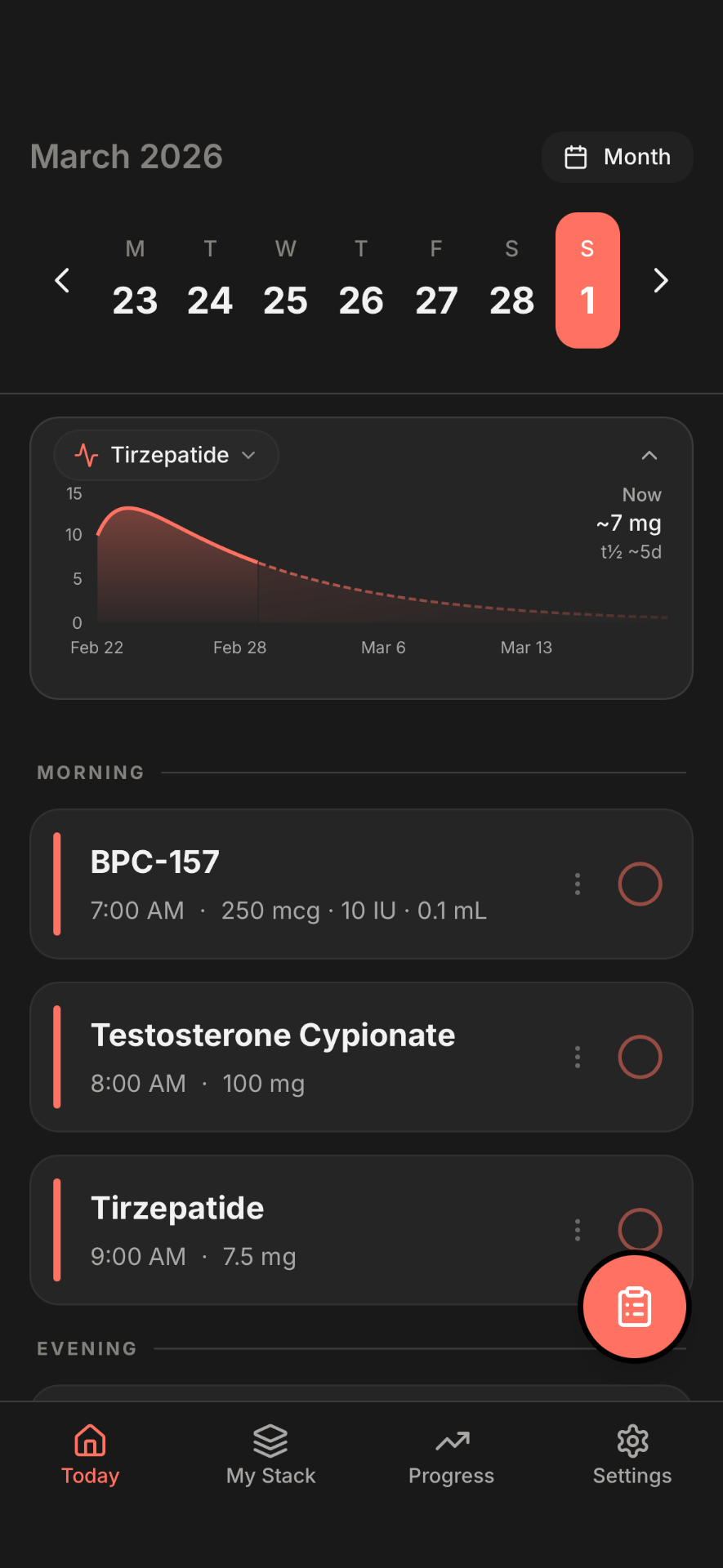
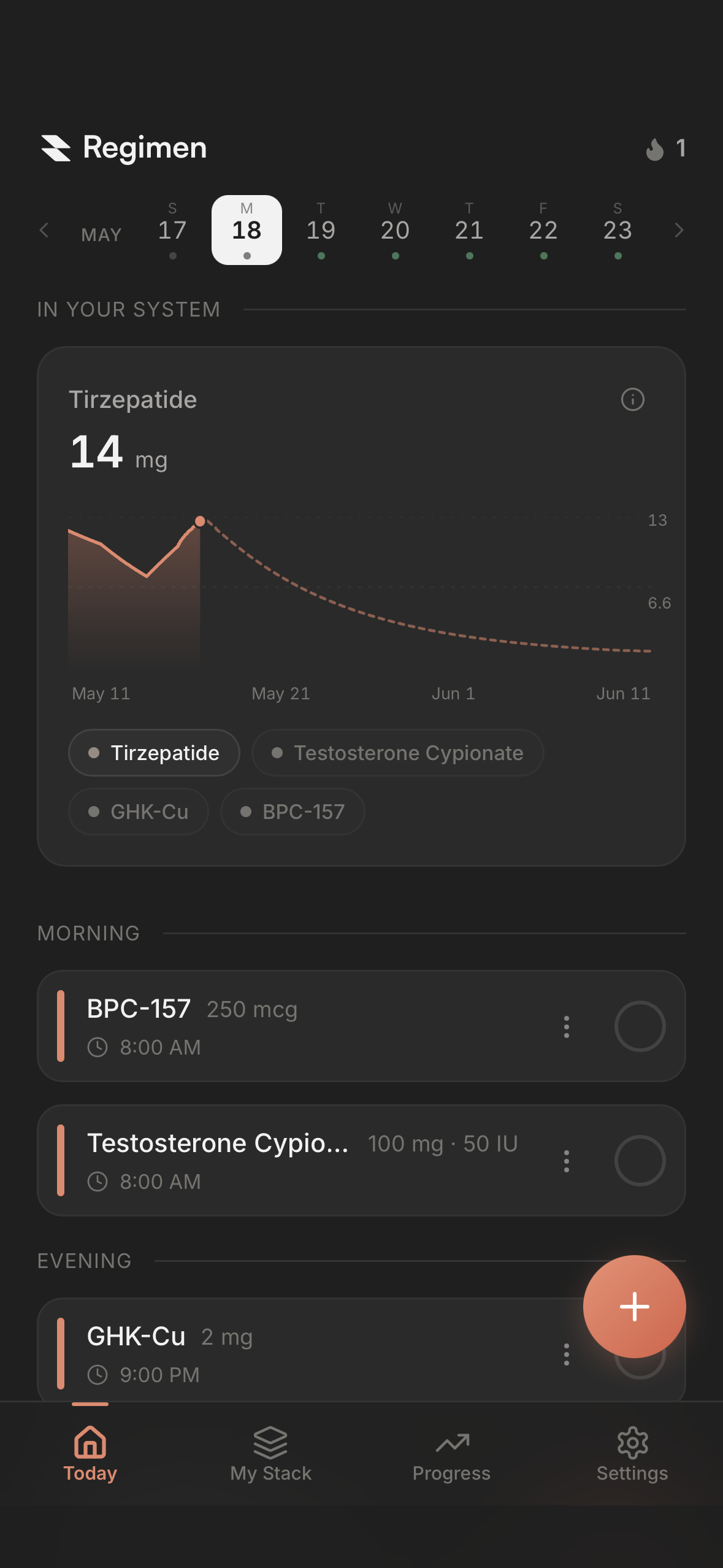
Regimen’s injection tracker lets you log dose dates alongside symptom notes, so you’re bringing actual data to your prescriber rather than trying to reconstruct the last three months from memory.
Who Uses Low-Dose Testosterone Therapy
The population is broader than most people expect.
Postmenopausal women are the most studied group. Surgical menopause (from oophorectomy) causes a sharper testosterone drop than natural menopause and is one of the clearer clinical indications.
Perimenopausal women are increasingly included as research expands. The hormonal shift begins years before the final period, and some women start noticing testosterone-related symptoms in their late 30s or 40s. See our perimenopause tracking guide for more on managing the full hormonal picture during this phase.
Transgender men using testosterone therapy typically use much higher doses (in male ranges) to achieve masculinization. Low-dose protocols are a different conversation, though Regimen supports tracking at any dose.
Women with premature ovarian insufficiency (POI), where the ovaries stop functioning before age 40, often lose testosterone alongside estrogen and are candidates for both replacement therapies.
Frequently Asked Questions
Is testosterone therapy safe for women?
At doses that keep levels within the normal female range, the research supports short- to medium-term safety. The global consensus statement from 2019 concluded that transdermal testosterone at physiological doses does not carry significant cardiovascular risk and is not associated with increased breast cancer risk based on current evidence. Long-term safety data (beyond two years) is more limited, which is why ongoing monitoring and regular check-ins with a prescriber matter.
What dose do women typically use?
Clinical trials have used topical testosterone in the range of 150-300mcg per day for postmenopausal women. Low-dose injection protocols studied in research settings have used 5-10mg per week of testosterone cypionate. These are rough reference points: actual prescriptions vary by individual, delivery method, and prescriber. The goal is to restore levels to the upper end of the female normal range, not to reach male levels.
Will I get side effects like hair growth or a deeper voice?
At appropriate female dosing, these side effects are uncommon. Virilization (acne, increased body hair, clitoral enlargement, voice changes) is dose-dependent. It tends to appear when levels go above the male-female boundary, either from too-high doses or from absorbing more than intended from topical applications. If you notice any of these signs, it’s worth getting labs done and discussing dose adjustment. They usually resolve when the dose is lowered.
How is tracking different from male TRT?
The frequency and reference ranges are different. Women on injectable testosterone may inject weekly or twice weekly at very small volumes. The therapeutic range you’re targeting is different, so normal lab values look completely different from male TRT. Symptom tracking also tends to include a different set of markers: for women, mood, libido, energy, and cognitive clarity are the key signals, whereas men often prioritize libido, strength, and hematocrit. Regimen works the same way regardless of dose, so you can log your protocol and track the same symptom correlations.
Regimen helps you track injection dates, dose amounts, and symptom trends in one place. See the HRT injection tracker guide for setup instructions.
Disclaimer: This article is for informational purposes only and is not medical advice. Hormone therapy should be prescribed and monitored by a qualified healthcare provider. Individual responses vary. Always consult your provider before starting or adjusting any hormone protocol.
Ready to track your protocol?
- Smart reminders so you never miss a dose
- Track weight, photos, and progress over time
- Medication level curves for every compound