The peptide community in the Philippines has been growing quietly, mostly in Manila, BGC, and Cebu, among the fitness and biohacking crowd. Here’s what the actual access picture looks like in 2026.
The Regulatory Context
The Philippines Food and Drug Administration (FDA Philippines) regulates medicines under Republic Act 9711. Peptides fall into a grey regulatory category:
- They are not approved drugs registered with the Philippine FDA.
- They are not explicitly scheduled controlled substances under Philippine drug law for most research peptides (BPC-157, TB-500, GHK-Cu are not on the Dangerous Drugs Board list).
- They are, however, unregistered medicines if intended for human use, a category the Philippine FDA has authority to act on.
- Bureau of Customs Philippines can seize imports of unregistered medicines.
The practical result: BPC-157, TB-500, and similar peptides are not narcotics in the Philippines. The risk is in the “unregistered medicine / customs seizure” zone rather than the criminal drug zone. That distinction matters for how you think about access.
The Philippines Fitness Culture Connection
Philippine sports culture is relevant context here. Boxing, basketball, and fitness training are deeply embedded, and the Philippine boxing tradition in particular means serious training culture is widespread. The functional fitness and biohacking scene has grown significantly in BGC, Makati, and Cebu over the past five years.
This has driven genuine organic demand for peptides in the Philippines. The question is not whether people use them, it’s how they access them responsibly.
Community Insight
The BGC and Makati fitness communities in particular have been discussing BPC-157 and TB-500 for injury recovery for several years. The compounding pharmacy route has been the cleaner path for those who know it exists. The grey import market runs alongside it.
Access in Practice
The compounding pharmacy route:
Some Filipino compounding pharmacies and private functional medicine doctors are familiar with peptide protocols. This exists most visibly in Metro Manila (BGC, Makati, Alabang) and Cebu City. Private physicians working in anti-aging, functional medicine, and sports medicine are your entry point.
The process: find a private physician experienced with peptide protocols, receive a prescription, have it compounded at a licensed pharmacy. This is above-board and navigable if you find the right prescriber.
The grey import route:
Most Filipino peptide users currently access through import, ordering from international research chemical suppliers. The customs risk is real: Bureau of Customs Philippines can seize packages containing unregistered medicines. It’s a personal use grey zone, not a narcotics situation, but seizure is a genuine risk with international orders.
Pro Tip
Private functional medicine and anti-aging clinics in BGC and Makati that already handle hormonal optimization protocols (TRT, HGH, IV therapy) are your best starting point for finding a peptide-familiar physician. Clinics that explicitly market longevity or functional medicine services are considerably more likely to have peptide protocol experience than a standard sports medicine clinic.
Peptides by Use Case
BPC-157 (injury recovery): The most discussed peptide in the Philippine fitness community. Musculoskeletal injury recovery is the primary use, ACL, rotator cuff, tendon issues. The boxing and basketball training cultures mean this application has genuine local relevance.
TB-500: Used alongside BPC-157 for systemic recovery support. Same regulatory profile, same access considerations.
GHK-Cu (topical): This is the most accessible category in the Philippines. GHK-Cu topical products circulate through beauty and wellness channels, and the Philippine beauty market’s sophistication means GHK-Cu is discussed in skincare and anti-aging contexts without the same scrutiny as injectables. Compounding pharmacies also produce topical GHK-Cu formulations.
Semax (intranasal): Present in the Manila biohacking community for cognitive applications. Same grey import situation as BPC-157.
What “Grey Area” Actually Means Here
It’s worth being precise about the legal framing. In the Philippines:
- Possession of BPC-157 or TB-500 for personal use is not a criminal drug offence.
- Selling or distributing unregistered medicines is an FDA Philippines violation with real penalties.
- Importing unregistered medicines for personal use is a Bureau of Customs grey zone, the risk is package seizure, not arrest.
If you’re sourcing for personal use through import, you’re not in dangerous drugs territory. You’re in unregistered medicine territory. The distinction is meaningful, but it doesn’t eliminate the customs risk or the lack of quality assurance on imported products.
Tracking Your Protocol
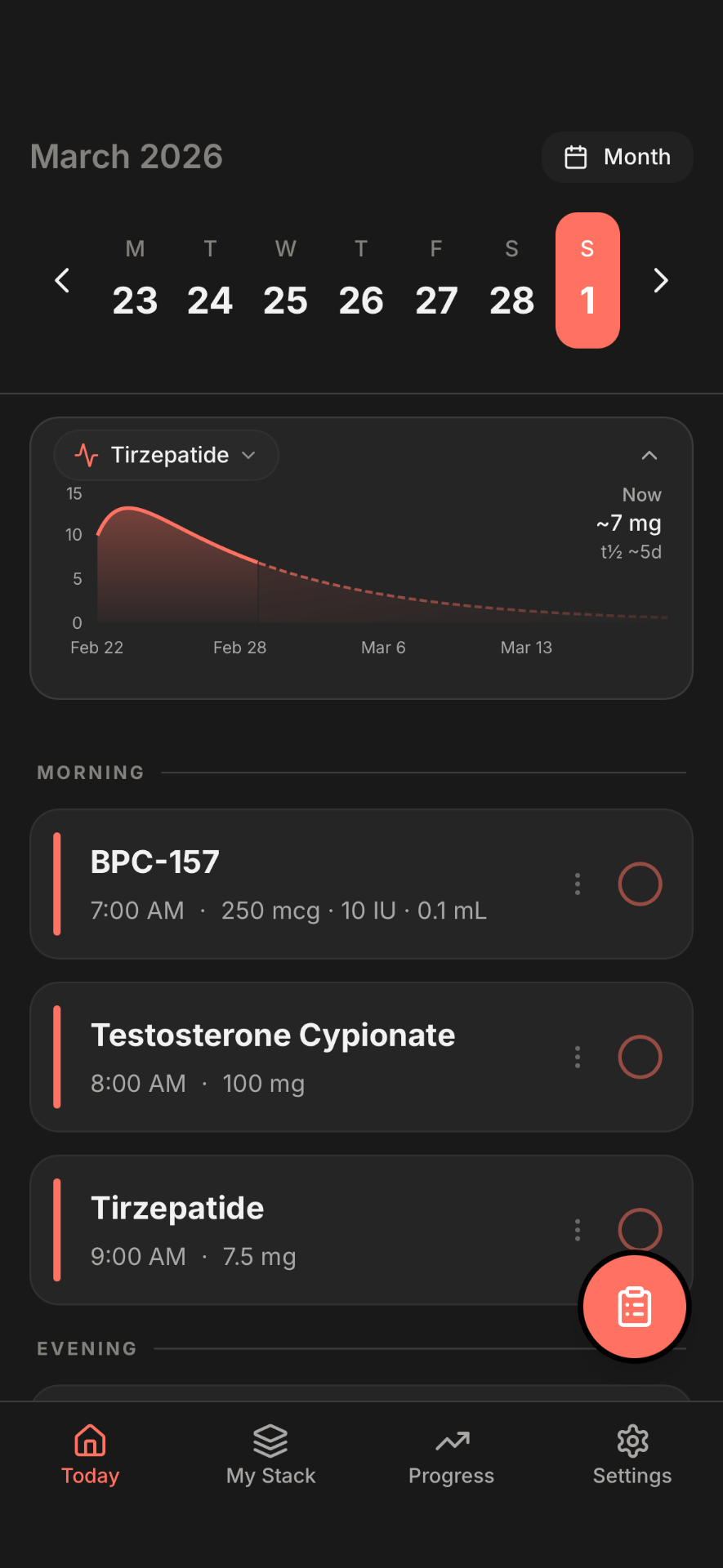
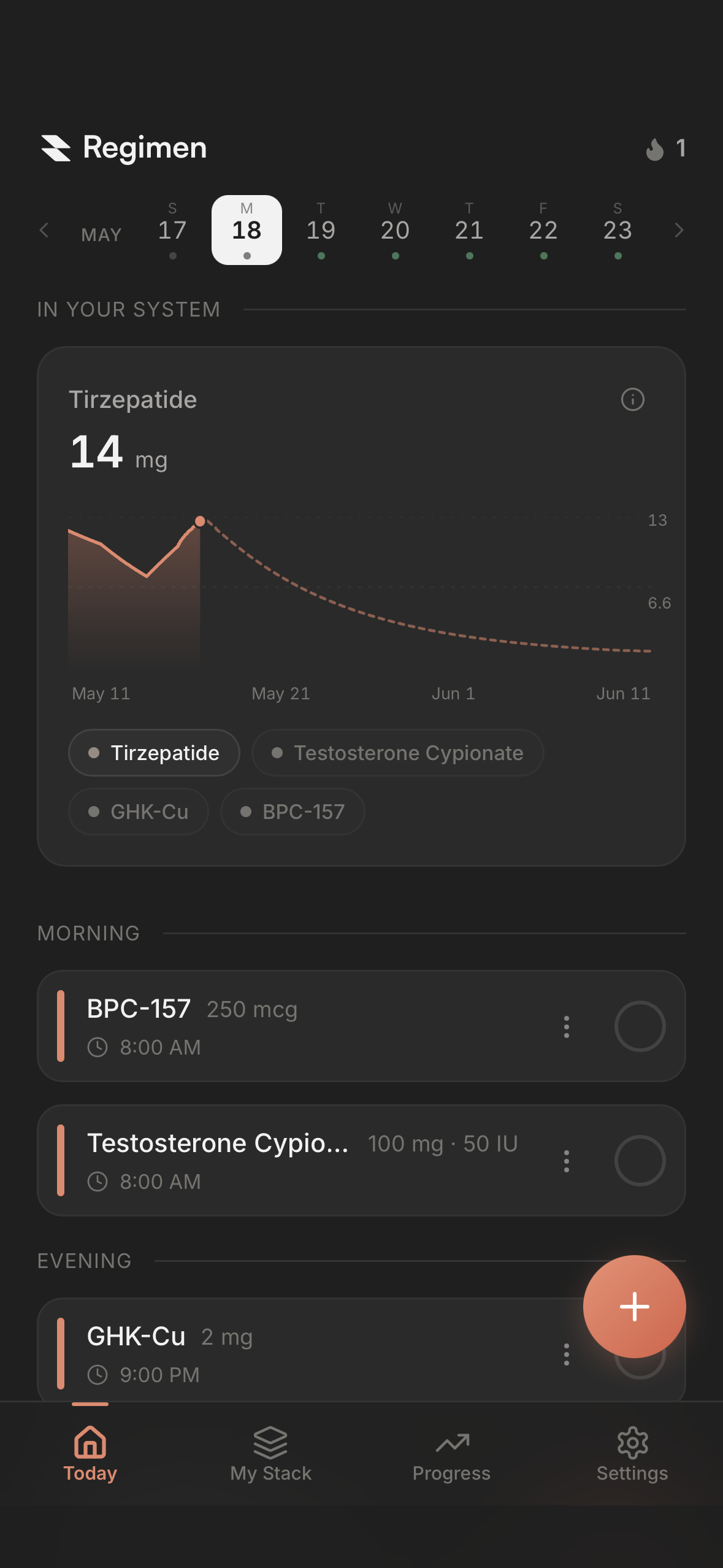
Peptide cycles run 4 to 8 weeks with structured rest periods. Tracking dose, volume, injection timing, and subjective recovery markers across a full cycle builds the kind of data that makes protocol adjustments meaningful.
Use the Peptide Calculator to calculate per-dose volumes from your reconstituted vials, and the Intranasal Calculator for any nasal formulations.
For the full Philippines cluster, see the Philippines TRT Guide and the Philippines GLP-1 Guide.
Frequently Asked Questions
What is the risk of buying peptides through social media in the Philippines?
High. Social media and informal channels for peptides in the Philippines have no quality control or cold-chain assurance. The same counterfeit and quality problems documented in the GLP-1 market apply. Licensed compounding pharmacies and reputable research chemical suppliers are meaningfully safer.
Are peptides legal in the Philippines?
Most research peptides (BPC-157, TB-500, GHK-Cu) are not controlled substances under Philippine drug law. They exist in a grey zone as unregistered medicines under FDA Philippines regulations. Personal use through import carries customs seizure risk rather than criminal liability for a standard user.
Can Bureau of Customs Philippines seize peptide imports?
Yes. Bureau of Customs can seize packages containing unregistered medicines. This is a real risk with international orders, not a theoretical one. The compounding pharmacy route through a licensed Filipino physician avoids this entirely.
Is GHK-Cu available in the Philippines?
GHK-Cu topical is widely available through beauty and wellness channels in the Philippines. Injectable GHK-Cu is available through compounding pharmacies with a physician prescription. Topical is the most mainstream and accessible format in the Philippine market.
Where do I find a peptide-familiar physician in the Philippines?
Private functional medicine and anti-aging clinics in BGC, Makati, and Alabang are the best starting points. Clinics advertising longevity medicine, hormonal optimization, or functional medicine services are more likely to have physicians familiar with peptide protocols than standard sports medicine or general practice.
What is the risk of buying peptides through social media in the Philippines? High. The same counterfeit and quality-assurance problems that affect the GLP-1 market in the Philippines apply to peptides sold through informal social media channels. There is no quality control, no cold-chain assurance, and no regulatory oversight. Compounding pharmacies and reputable international research chemical suppliers are meaningfully safer options.
This article is for informational purposes only and does not constitute medical advice. Discuss all treatment decisions with your healthcare provider.
Ready to track your protocol?
- Smart reminders so you never miss a dose
- Track weight, photos, and progress over time
- Medication level curves for every compound