Verification note: Coverage, eligibility criteria, and pricing for UK health services change frequently. Information here reflects publicly available data as of May 2026. Always verify current NHS access and clinical thresholds at nice.org.uk or nhs.uk before making treatment decisions.
Key takeaway: Your GP will test total testosterone - and that is usually it. But total testosterone alone misses the full picture. You need free testosterone, SHBG, and oestradiol to understand what is actually happening. NHS reference ranges are 8-29 nmol/L (230-835 ng/dL), but many men feel symptomatic below 12-15 nmol/L despite being ‘in range.’ Private blood tests from Medichecks or Thriva cost £39-89 and include the full panel your GP will not order.
What Your GP Will Test (and What They Will Not)
When you ask your GP about testosterone, they will typically order total testosterone - and nothing else. The problem is that total testosterone is only part of the story. Roughly 98% of your testosterone is bound to proteins (SHBG and albumin). Only the remaining 2% - free testosterone - is biologically active.
A man with total testosterone of 15 nmol/L and high SHBG might have less bioavailable testosterone than a man with 12 nmol/L and low SHBG. Without measuring SHBG and calculating free testosterone, the number on its own can be misleading.
The full panel you should request
| Test | What it tells you | Will your GP order it? |
|---|---|---|
| Total testosterone | Overall testosterone level | Yes |
| Free testosterone | The bioavailable, active portion | Rarely - ask specifically |
| SHBG | How much testosterone is bound and unavailable | On request |
| Oestradiol (E2) | Elevated E2 causes mood, water retention, breast tissue issues | Rarely |
| LH and FSH | Distinguishes primary vs secondary hypogonadism | Yes, initially |
| Prolactin | Rules out pituitary tumour as a cause of low T | Sometimes |
| Thyroid function (TSH, fT4) | Thyroid issues mimic low testosterone symptoms | On request |
| Full blood count (FBC) | Includes haematocrit - essential for TRT monitoring | Yes |
| PSA | Prostate health baseline | Yes (if over 40 or starting TRT) |
| Liver function (LFT) | Baseline safety marker | Yes |
| Lipid panel | Cholesterol and cardiovascular baseline | Yes |
| HbA1c | Metabolic health, insulin resistance | On request |
Understanding UK Reference Ranges
UK labs report testosterone in nmol/L (nanomoles per litre). American labs use ng/dL (nanograms per decilitre). This causes constant confusion if you are reading American forums or studies.
| nmol/L | ng/dL | Interpretation |
|---|---|---|
| 8 | 230 | BSSM: below this usually warrants therapy with symptoms |
| 12 | 346 | Lower end of ‘normal’ - many men are symptomatic here |
| 15 | 432 | Mid-low range |
| 20 | 576 | Mid-range |
| 25 | 720 | Upper-mid range |
| 29 | 835 | Top of NHS reference range |
Ready to track your protocol?
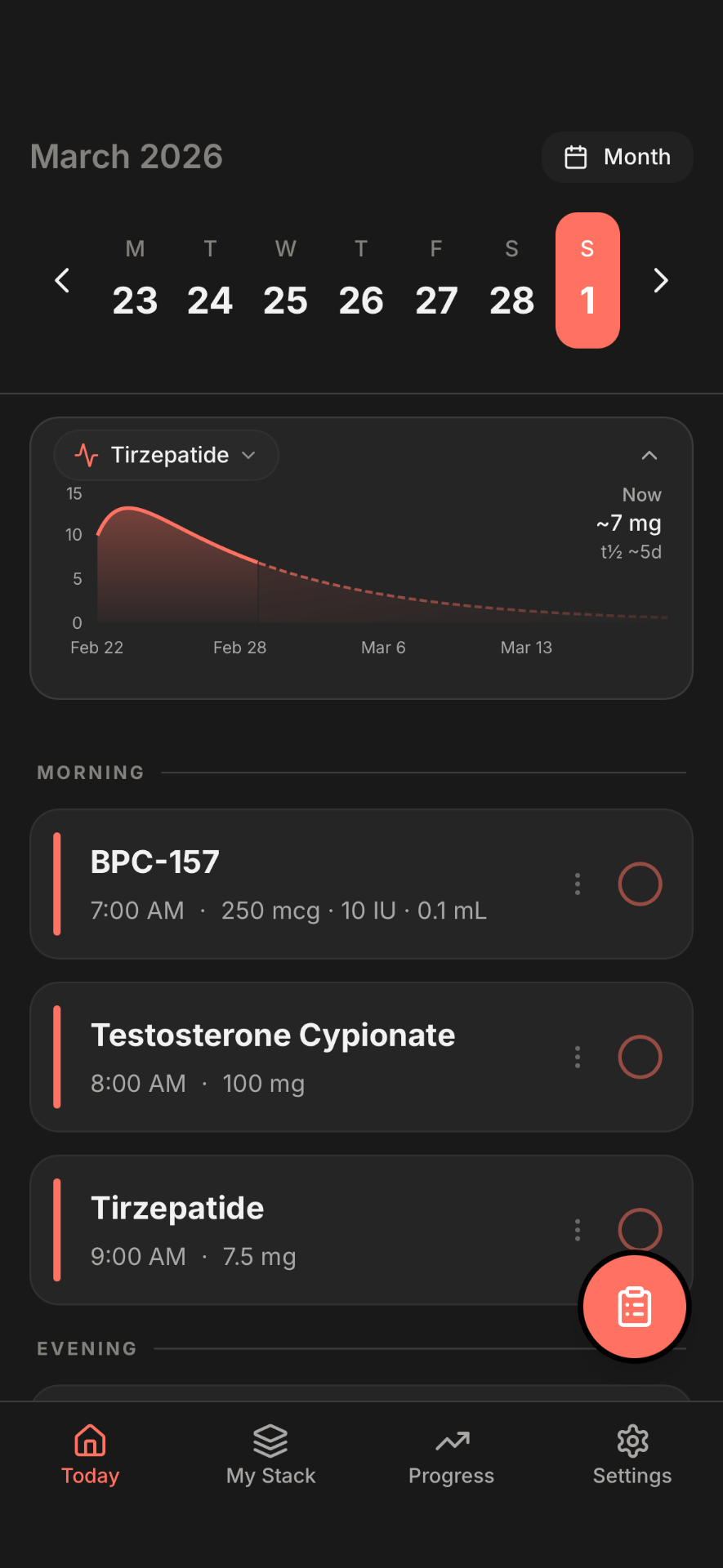
- Smart reminders so you never miss a dose
- Progress tracking with photos and weight
- Medication level curves for every compound
The grey zone (8-12 nmol/L): Many men fall in this range and are told they are ‘normal’ because they are above the 8 nmol/L threshold. If you are at 9-10 nmol/L with clear symptoms, push for specialist referral.
Where to Get Private Blood Tests
Medichecks
- Male Hormone Check - total testosterone, free testosterone (calculated), SHBG, oestradiol, prolactin. From £39 (finger-prick) to £69 (venous).
- TRT Monitoring Panel - the above plus haematocrit, PSA, LFT, lipids, HbA1c. From £89.
- Turnaround: 2-3 business days from sample receipt.
Thriva
- Home finger-prick kits with app-based results. Testosterone + SHBG + free T available. Results in 2-5 days.
Forth
- Similar to Thriva, wider panel options. Optional GP consultation included with some packages.
How to Time Your Blood Test
- Morning, before 10am. Testosterone peaks in the early morning and can drop 20-40% by the afternoon.
- Fasting. Food intake can transiently affect hormone levels. Water is fine.
- If you are on TRT: test at trough. The morning of your injection day, before your injection.
- Same time each test. For tracking trends over time, consistency in timing matters more than the absolute number.
How to Read Your Results
- Total testosterone below 8 nmol/L on two morning samples = below the BSSM treatment threshold. Push for endocrinologist referral. (The threshold is BSSM’s, not NICE’s; NICE has no TRT threshold, despite the widespread citation.)
- Total testosterone 8-12 nmol/L with symptoms = grey zone. Free testosterone and SHBG become critical.
- High SHBG (above 50-60 nmol/L) = more testosterone is bound and unavailable. Total T may look adequate but free T is low.
- Elevated oestradiol = may explain symptoms like water retention, mood issues, breast tenderness.
- Elevated haematocrit (above 0.52 or 52%) = on TRT, this is the primary safety concern. May require dose adjustment.
Track Your Blood Work Over Time
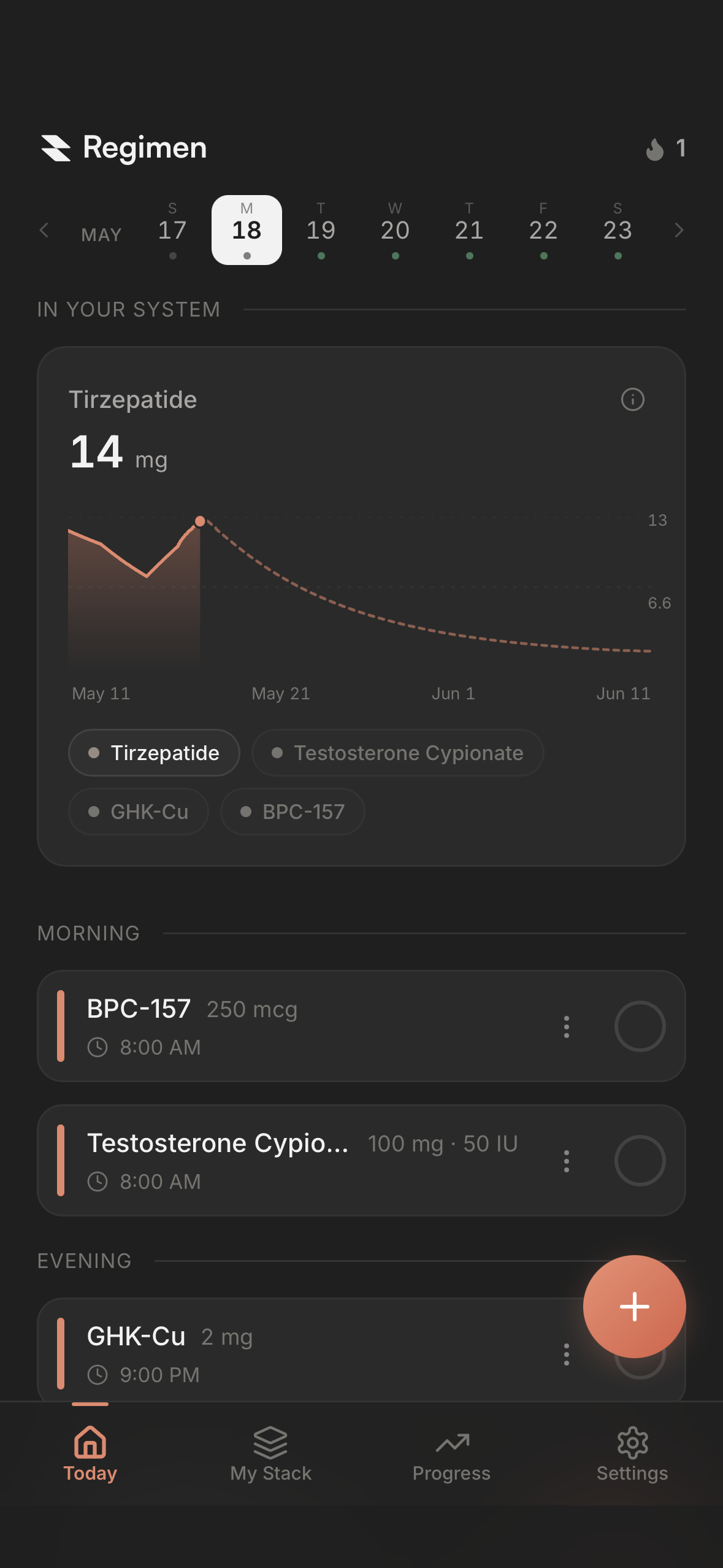
A single blood test is a snapshot. The real value comes from tracking trends - how your levels change with protocol adjustments, over seasons, and with lifestyle changes. Regimen logs your blood work alongside your protocol so you can see the relationship between what you inject and what your labs show.
Frequently Asked Questions
What testosterone level is considered low in the UK?
The 8 nmol/L (230 ng/dL) figure comes from the British Society for Sexual Medicine, not NICE. NICE has no technology appraisal setting a testosterone threshold. BSSM’s position is that total testosterone below 8 nmol/L usually warrants therapy where symptoms are present, that 8 to 12 nmol/L may warrant a trial of at least 6 months based on symptoms, and that above 12 nmol/L therapy is not indicated. Many men do experience symptoms in that 8 to 12 band, which is exactly why BSSM treats it as a trial zone rather than a refusal.
How much does a private testosterone blood test cost in the UK?
From £39 for a basic hormone check (Medichecks finger-prick) to £89 for a comprehensive TRT monitoring panel with venous draw.
Should I get a finger-prick or venous blood test?
Venous draws are more accurate, especially for sensitive assays like free testosterone and oestradiol. Finger-prick is convenient for basic total testosterone screening.
How do I convert nmol/L to ng/dL?
Multiply nmol/L by 28.8. For example, 15 nmol/L = 432 ng/dL. Or use the Regimen testosterone calculator.
Track your blood work alongside your TRT protocol with Regimen. Log results in nmol/L and see trends over time. Free for one compound.
Regimen is a tracking tool, not a medical service. We do not provide medical advice. Always consult your healthcare professional before starting, changing, or stopping any medication protocol.