Norway’s peptide landscape looks similar to Sweden from the outside, but the details matter. Here’s what the regulations actually mean if you’re in Norway and researching BPC-157, TB-500, or Semax.
The Legal Context: Legemiddelloven
In Norway, the Medicines Act (Legemiddelloven) classifies substances with pharmacological activity as prescription medicines if they’re intended for human use. That single principle is what shapes the entire Norwegian peptide picture.
What it means practically:
- BPC-157, TB-500, GHK-Cu, Semax. None of these are approved medicines in Norway. None are registered with the Norwegian Medicines Agency (Statens legemiddelverk).
- Selling them openly as supplements is not legal under Norwegian law.
- Importing them for personal use from international research chemical suppliers puts you in unregistered medicine territory. Grey area, not black, but real risk exists.
- They are not narcotic controlled substances under the Narkotikaforskriften. The legal risk is in the “unregistered medicine” category, not the drug offence category.
This is an important distinction. The Norwegian framing for most research peptides is: not a criminal drug problem, but a medicines regulatory problem. The enforcement angle is customs seizure rather than criminal prosecution.
The Customs Reality
Norwegian Customs (Tollvesenet) can and does seize packages containing unregistered medicines arriving from abroad. The seizure rate is real, not theoretical.
Norway is not the UK. The UK research chemical market has operated under a more permissive interpretive framework for years. Norway’s Tollvesenet treats imports of pharmacologically active substances more like Sweden, with scepticism and enforcement follow-through.
If you order BPC-157 from a UK or Chinese supplier to a Norwegian address, seizure is a genuine possibility. You won’t face criminal charges for a single personal-use package of a non-narcotic peptide, but you will lose the product.
Warning
Do not order peptides from international suppliers to a Norwegian residential address if you want a reliable supply. The customs risk is high enough that it’s not a workable long-term strategy. The compounding pharmacy route exists precisely to solve this problem.
The Compounding Pharmacy Route
Norway has a compounding pharmacy (apotek) network. Norwegian pharmacies can compound peptide preparations with a valid physician prescription. This is the clean access path.
The process:
- Find a private functional medicine, anti-aging, or sports medicine physician in Norway who is familiar with peptide protocols. These exist, primarily in Oslo and Bergen, at clinics already active in hormonal optimization and anti-aging work.
- The physician writes a prescription for the specific peptide compound.
- A compounding pharmacy prepares it to specification.
- You collect from the pharmacy.
It requires finding the right prescriber. The prescriber pool in Norway for peptide-familiar physicians is smaller than in the UK, but it exists.
Pro Tip
Clinics in Oslo that actively manage TRT and anti-aging hormone protocols are your best starting point. Physicians at these clinics are more likely to have peptide protocol experience than a general practitioner or standard sports medicine doctor. Search for “anti-aging klinikk Oslo” or “hormonklinikk Oslo” and call to ask directly about peptide prescribing.
Peptides in the Norwegian Community
Despite the regulatory friction, there is an active biohacking and fitness community in Norway that uses peptides. Oslo, Bergen, and Stavanger all have established fitness cultures, and the cognitive performance angle has particular traction in Scandinavian communities.
BPC-157: The most discussed peptide in Norwegian fitness and recovery circles. Musculoskeletal injury recovery is the primary use case. People import it (with customs risk) or find compounding access through private clinics.
TB-500: Used alongside BPC-157 for recovery. Same customs risk profile.
Semax: Notable Norwegian interest in the nootropic applications of Semax, driven partly by the Scandinavian interest in cognitive optimization. Semax is a nasal spray formulation, which changes the customs detection profile somewhat but doesn’t change the legal classification.
GHK-Cu topical: The least scrutinized category. GHK-Cu topical products sold through cosmetics and skincare channels are the most accessible peptide-adjacent option in Norway. Compounding pharmacies also produce injectable GHK-Cu with a prescription.
Community Insight
The most consistent feedback from the Norwegian biohacking community: “The customs situation is the main friction point. Once you find a compounding pharmacy route through a doctor, it’s actually fine. The problem is that most people don’t know the compounding option exists and just keep trying to import.”
Comparing Norway and Sweden
Norway and Sweden look similar on paper. Both Legemiddelloven/Läkemedelslagen frameworks, both active Tollvesenet/Tullverket enforcement, both without approved peptide medicines on their registries. The practical differences are small:
- Sweden’s research chemical crackdowns have been more publicized, partly because the Swedish Medicines Agency has been more vocal about enforcement.
- Norway’s enforcement is quieter but no less real.
- The compounding pharmacy route is available in both countries. Finding a peptide-familiar prescriber is slightly easier in Oslo than Stockholm (smaller city, more concentrated biohacking community), but both are navigable.
Tracking Your Peptide Protocol
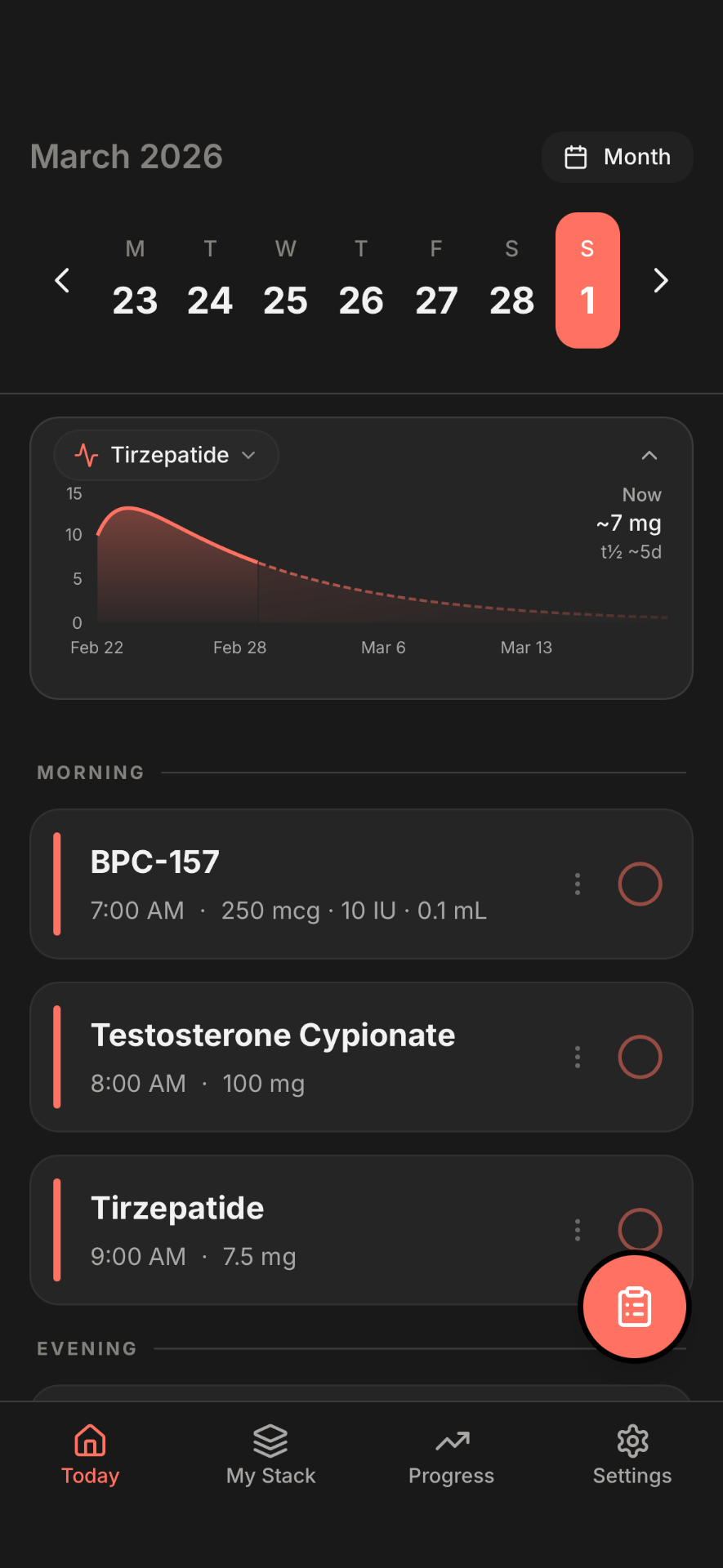
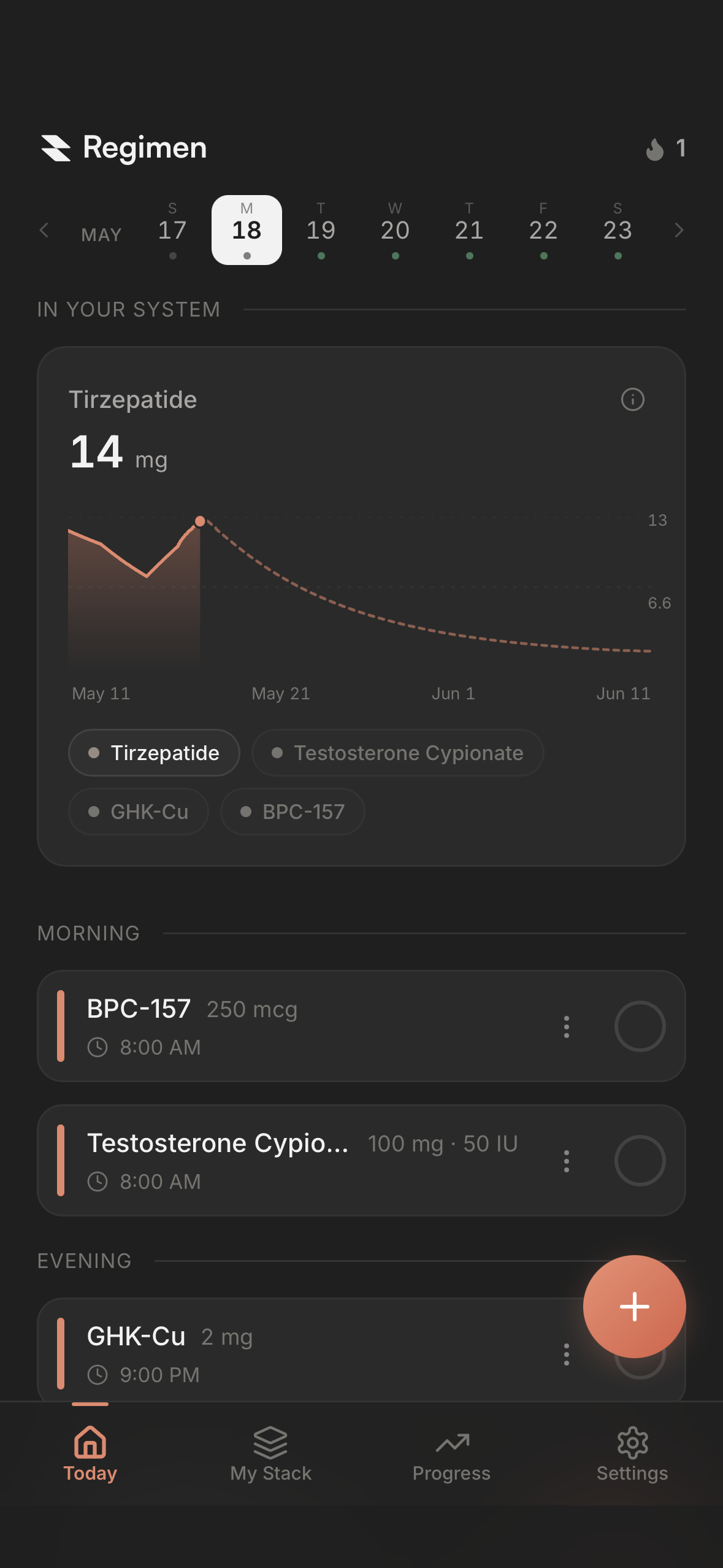
Peptide cycles typically run 4 to 8 weeks with breaks. Dose, timing, injection volume, and subjective response all benefit from systematic tracking, especially across multiple compounds or concurrent protocols.
Use the Peptide Calculator to calculate per-dose volumes from reconstituted vials, and the Intranasal Calculator for Semax or any other nasal spray formulations.
For the full Norway cluster, see the Norway TRT Guide and the Norway GLP-1 Guide.
Frequently Asked Questions
Is Semax available in Norway?
Semax is not an approved medicine in Norway and exists in the same grey zone as other research peptides under the Legemiddelloven. The compounding pharmacy route with a physician prescription is the clean access path. Importing nasal spray formulations carries the same customs risk as other peptide imports.
Are peptides legal in Norway?
Peptides are not narcotic controlled substances in Norway. However, under the Legemiddelloven (Medicines Act), pharmacologically active substances intended for human use are classified as medicines and require registration. Most research peptides are unregistered medicines in Norway, a grey zone with customs risk, not a criminal drug classification.
Will Norwegian customs seize peptide imports?
Yes, this is a real risk. Norwegian Customs (Tollvesenet) can and does seize packages containing unregistered medicines. A single personal-use package of a non-narcotic peptide will not lead to criminal charges, but seizure is a genuine possibility that makes international ordering an unreliable strategy.
Can a compounding pharmacy in Norway prepare BPC-157?
Yes, with a physician prescription. Norwegian pharmacies (apotek) can compound peptide preparations to specification. Finding a prescriber familiar with peptide protocols is the prerequisite step.
What’s the difference between the Norwegian and UK peptide situation?
What is the difference between the Norwegian and UK peptide situation?
The UK has historically operated under a more permissive regulatory interpretation for research chemicals intended “not for human use.” Norway applies its Legemiddelloven framework more strictly, similar to Sweden. Customs enforcement is more consistent in Norway. The compounding pharmacy route in Norway is the cleaner alternative to the import route that UK-based users typically rely on.
Is Semax available in Norway? Semax is not an approved medicine in Norway. It exists in the same grey zone as other research peptides under the Legemiddelloven. The compounding pharmacy route with a physician prescription is the clean access path. Some people import nasal spray formulations from Russian or Eastern European suppliers, with the same customs risk.
This article is for informational purposes only and does not constitute medical advice. Discuss all treatment decisions with your healthcare provider.
Ready to track your protocol?
- Smart reminders so you never miss a dose
- Track weight, photos, and progress over time
- Medication level curves for every compound