Verification note: HSA registration status, MOH subsidy criteria, and clinic pricing change frequently. Information here reflects publicly available data as of May 2026. Always verify current status at hsa.gov.sg before making treatment decisions.
The peptide scene in Singapore is smaller than in the US or Australia, but it’s growing, driven by the wellness clinic expansion, the biohacking community, and athletes looking for recovery tools. Here’s how it actually works in 2026.
Warning: Most research peptides discussed below (BPC-157, TB-500, GHK-Cu) are not registered with HSA for human use. This guide is educational. Importing peptides into Singapore without a prescription is illegal and HSA enforcement is active. Use only under medical supervision through a registered compounding pharmacy or clinic.
What HSA Regulates
Singapore’s Health Sciences Authority is the regulatory body for all medicines. The categories that matter for peptides:
- Registered medicines: Drugs that have gone through HSA approval. Most research peptides are NOT in this category.
- Specialist-prescribed medicines: Medications that licensed doctors can prescribe even without standard HSA registration, often via the Special Access Scheme.
- Compounded preparations: Some peptides can be prepared by registered compounding pharmacies on a per-prescription basis.
In practice: BPC-157, TB-500, and most other research peptides are not HSA-registered, but legitimate access exists through specialist clinics that work with compounding pharmacies.
What’s Available Through Legitimate Channels
The peptides Singaporean users can realistically access through clinics and compounding pharmacies:
- BPC-157: The most-requested research peptide. Used for soft tissue recovery. Available through compounding pharmacies on a doctor’s prescription.
- TB-500 (Thymosin Beta-4): Similar use case to BPC-157. Available through the same channels.
- GHK-Cu: Skin and connective tissue support. Some aesthetic clinics carry this.
- MOTS-c: Mitochondrial peptide. Less commonly available, requires specialist prescription.
- Semax / Selank: Neurological peptides. Very niche, limited access.
Ready to track your protocol?
- Smart reminders so you never miss a dose
- Progress tracking with photos and weight
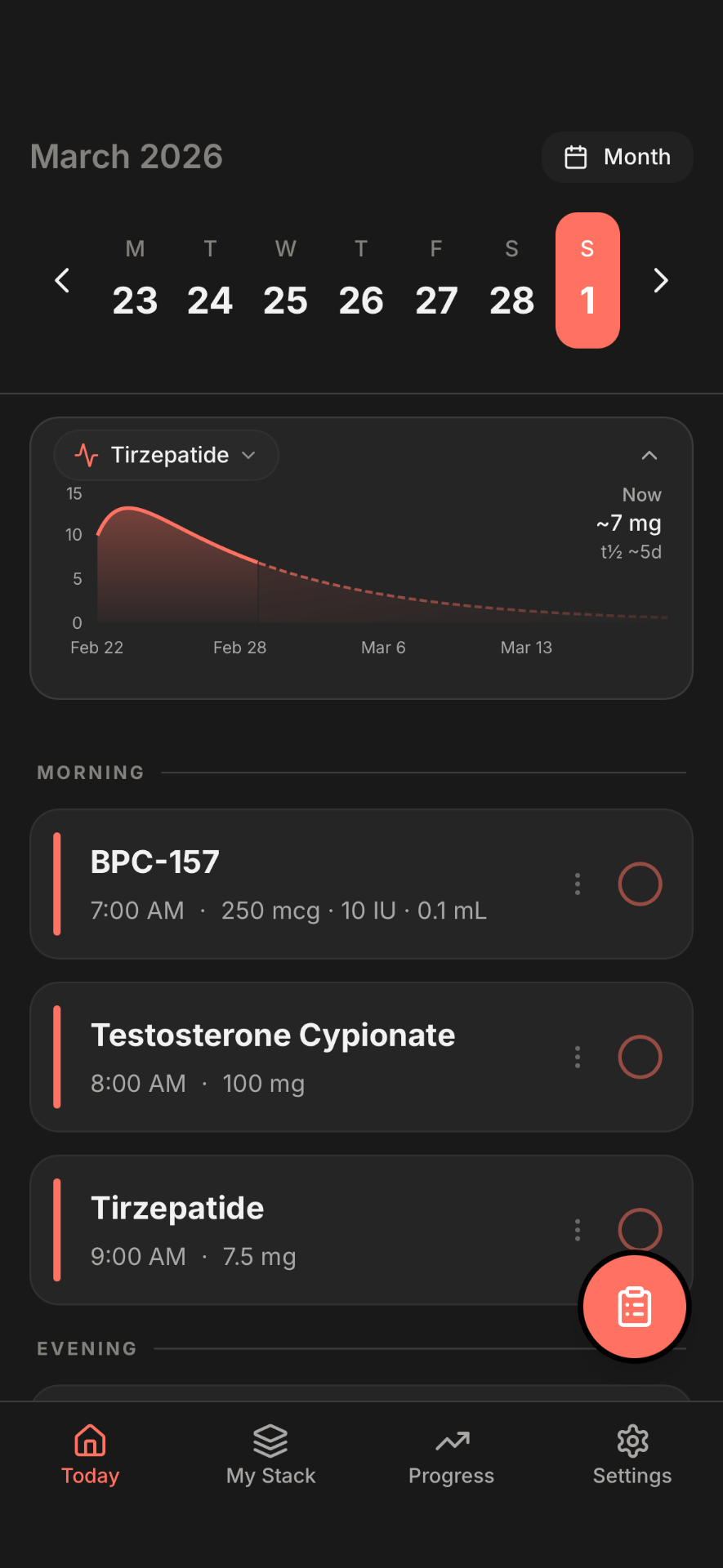
- Medication level curves for every compound
The clinics most experienced with peptide protocols in Singapore are sports medicine clinics, longevity-focused practices, and aesthetic medicine clinics. General practitioners typically don’t engage with peptides.
Compounding Pharmacies in Singapore
A small but growing number of compounding pharmacies in Singapore prepare peptide formulations on prescription. The process:
- Get a prescription from a doctor with peptide experience
- The doctor sends the prescription to a compounding pharmacy
- The pharmacy prepares the lyophilized vial, you collect it
- You reconstitute and self-inject as instructed
Costs vary widely depending on the peptide and quantity. A typical 5mg BPC-157 vial through a compounding pharmacy in Singapore lands around SGD 80-180 per vial.
What to Monitor and Track
Peptide protocols are dose-, frequency-, and reconstitution-sensitive. The variables worth tracking:
- Reconstitution date and concentration (peptides have limited refrigerated stability)
- Dose per injection (in mg or mcg)
- Injection site rotation
- Subjective response (recovery time, pain levels, soft tissue healing)
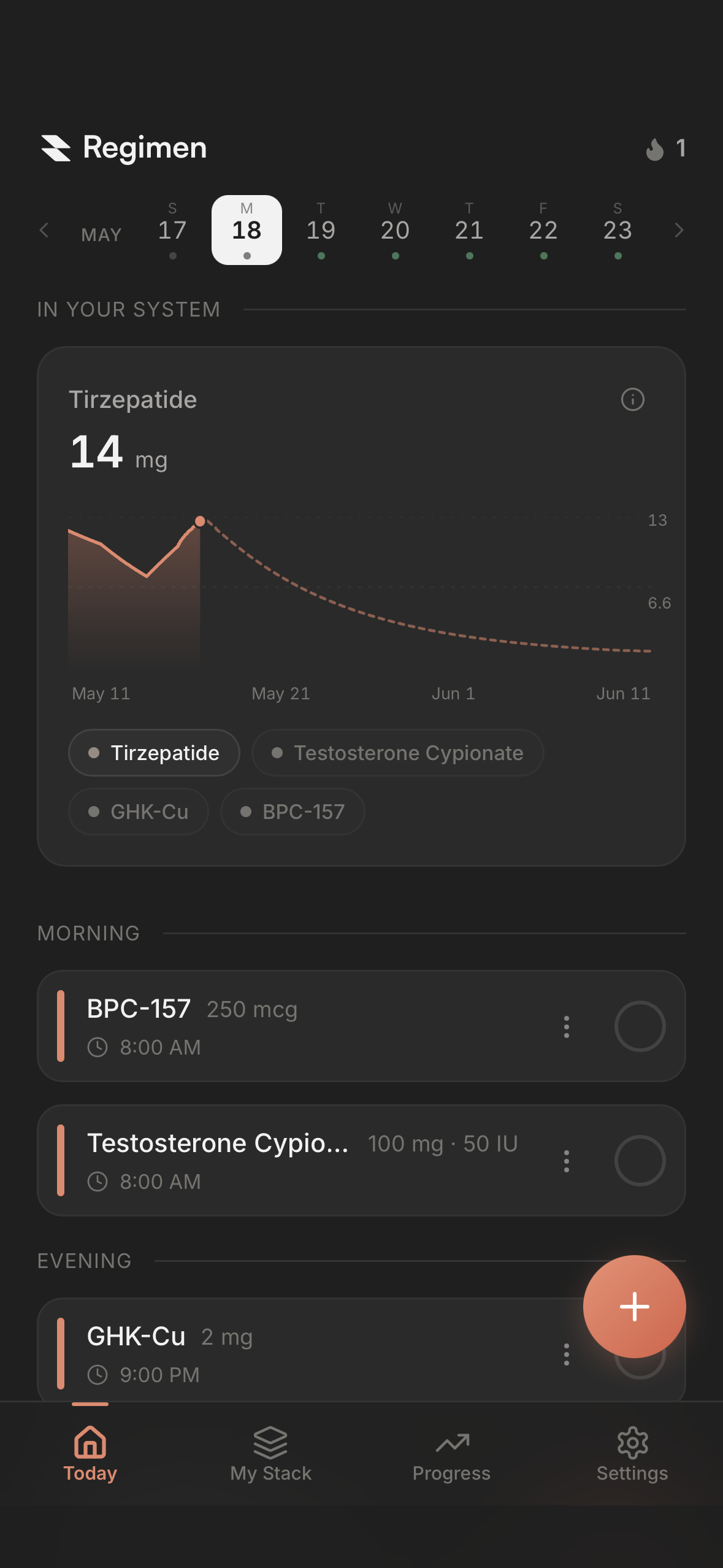
For multi-peptide protocols (a common pattern: BPC-157 + TB-500 stacked for injury recovery), tracking each compound separately matters. This is exactly the use case Regimen is built for.
Common Mistakes Singaporean Peptide Users Make
- Importing from overseas suppliers: HSA monitors postal channels. Personal-use seizures happen and the legal route exists.
- Storing reconstituted vials too long: Most peptides last 28 days refrigerated after reconstitution. After that, potency drops and contamination risk rises.
- Skipping injection site rotation: Same site repeatedly leads to localized scar tissue. Rotate.
- Not tracking reconstitution dates: When did you mix this vial? If you don’t know, you don’t know if it’s still good.
Tracking Your Protocol with Regimen
Track your peptide protocol with Regimen.
For TRT in Singapore, see the TRT Singapore Guide 2026. For GLP-1 medications, see the Ozempic and Mounjaro Singapore Guide 2026.
Frequently Asked Questions
Are peptides legal in Singapore?
Most research peptides like BPC-157 and TB-500 are not HSA-registered, but they can be legally accessed through registered compounding pharmacies on a doctor’s prescription. Importing peptides into Singapore without a prescription is illegal and HSA enforcement is active.
How do I get BPC-157 in Singapore?
Through a doctor with peptide experience who can write a prescription that a compounding pharmacy fulfills. Sports medicine clinics, longevity-focused practices, and some aesthetic clinics are the most likely sources for prescriptions.
How much do peptides cost in Singapore?
A 5mg BPC-157 vial through a compounding pharmacy typically runs SGD 80-180. TB-500 is comparable. Costs scale with vial size and peptide type. Consultations to obtain a prescription run SGD 150-400.
Can I import peptides into Singapore for personal use?
No. Personal import without a prescription is illegal and HSA actively monitors postal shipments. Seizures and penalties happen. The legal route through a Singapore-registered compounding pharmacy is the right approach.
How do I track multiple peptides at once?
Log each peptide separately with its reconstitution date, concentration, dose per injection, and injection site. For stacks like BPC-157 + TB-500, tracking each compound’s protocol on its own timeline matters. Regimen handles multi-compound tracking.
Track your peptide protocol with Regimen. Log reconstitution dates, doses, and injection sites. Free for one compound.
Regimen is a tracking tool, not a medical service. We do not provide medical advice. Always consult your healthcare professional before starting, changing, or stopping any medication protocol.