Verification note: Pharmac funding decisions, Special Authority criteria, and Medsafe approvals change frequently. Information here reflects publicly available data as of May 2026. Always verify current status at pharmac.govt.nz and medsafe.govt.nz before making treatment decisions.
If you are in New Zealand and thinking about TRT, the timing is actually good. Pharmac made testosterone gel fully funded in 2024, and GPs now have clearer guidance to manage it directly without routing everyone through a specialist first. The NZ pathway is more accessible and more affordable than what patients in Australia or the UK typically deal with. Here is the full picture.
What Pharmac Funds in 2026
New Zealand’s Pharmac-funded testosterone options are straightforward. Here is where things stand:
| Product | Route | Pharmac-funded | Your cost |
|---|---|---|---|
| Testogel (testosterone gel) | Topical daily | Yes (from April 1, 2024) | NZ$5 co-pay per 3-month supply |
| Depo-Testosterone (testosterone cypionate) | Injection | Yes | NZ$5 co-pay per prescription |
| Testosterone cream | Topical daily | No | Private cost only |
| Testosterone oral capsules | Oral | No (restricted: Section 29, pre-Nov 2021 patients only) | Not available for new patients |
| Testosterone patches | No longer available | Removed from Pharmaceutical Schedule November 2024 | N/A |
The 2024 Pharmac decision on Testogel was significant. Previously, funding had tighter restriction criteria. Now it is funded for any clinically relevant use, which means a diagnosis of hypogonadism from your GP is sufficient.
The NZ$5 co-pay covers a full 3-month supply. That is one of the lowest effective costs for TRT anywhere in the English-speaking world.
How to Get TRT Through Your GP in New Zealand
Updated 2024 BPAC (Best Practice Advocacy Centre) guidelines now recommend that GPs manage TRT directly for straightforward cases. You no longer need a mandatory specialist referral to start testosterone treatment if your GP is comfortable with the diagnosis.
The pathway looks like this:
- Book a GP appointment and describe your symptoms (low energy, libido, mood, muscle loss, cognitive fog)
- Your GP orders morning blood tests: two total testosterone samples on separate mornings, plus LH, FSH, and SHBG
- If testosterone consistently falls below the clinical threshold (typically below 8-12 nmol/L, interpreted alongside symptoms), your GP can initiate TRT directly
- Additional baseline bloods before starting: full blood count, PSA if you are over 45, and a metabolic panel
- Your GP prescribes Testogel (or Depo-Testosterone if injections are preferred), submits the Special Authority application to Pharmac, and dispenses at the NZ$5 rate from any NZ pharmacy
For complex presentations (secondary hypogonadism, fertility concerns, unclear cause), your GP may refer to an endocrinologist or urologist. But for the majority of patients with classic primary hypogonadism symptoms and confirmatory labs, GP management is now the standard.
Blood Work: What to Get and When
Before starting TRT:
- Total testosterone (two morning samples, drawn before 10am, on separate days)
- LH and FSH (to distinguish primary from secondary hypogonadism)
- SHBG (to calculate free testosterone)
- Full blood count (baseline hematocrit and hemoglobin)
- PSA (if you are over 45 or have prostate risk factors)
- Estradiol (optional but useful baseline)
- Metabolic panel: HbA1c, lipids, liver function
Once on TRT (monitoring):
- Total testosterone and SHBG at 6-12 weeks after starting, then every 6-12 months once stable
- PSA annually if over 45
- Full blood count (hematocrit rises on TRT: above 54% warrants discussion with your GP)
- Estradiol if you are experiencing high-estrogen symptoms (water retention, mood changes, libido changes despite adequate testosterone)
New Zealand labs report testosterone in nmol/L. If you are converting from US ng/dL: 10 nmol/L = 288 ng/dL, 15 nmol/L = 432 ng/dL, 25 nmol/L = 720 ng/dL.
You can use the TRT dose calculator to model weekly dose totals and check free testosterone against your SHBG result. The split dose calculator is useful if your GP prescribes weekly Depo-Testosterone injections and you want to compare a twice-weekly protocol.
Ready to track your protocol?
- Smart reminders so you never miss a dose
- Progress tracking with photos and weight
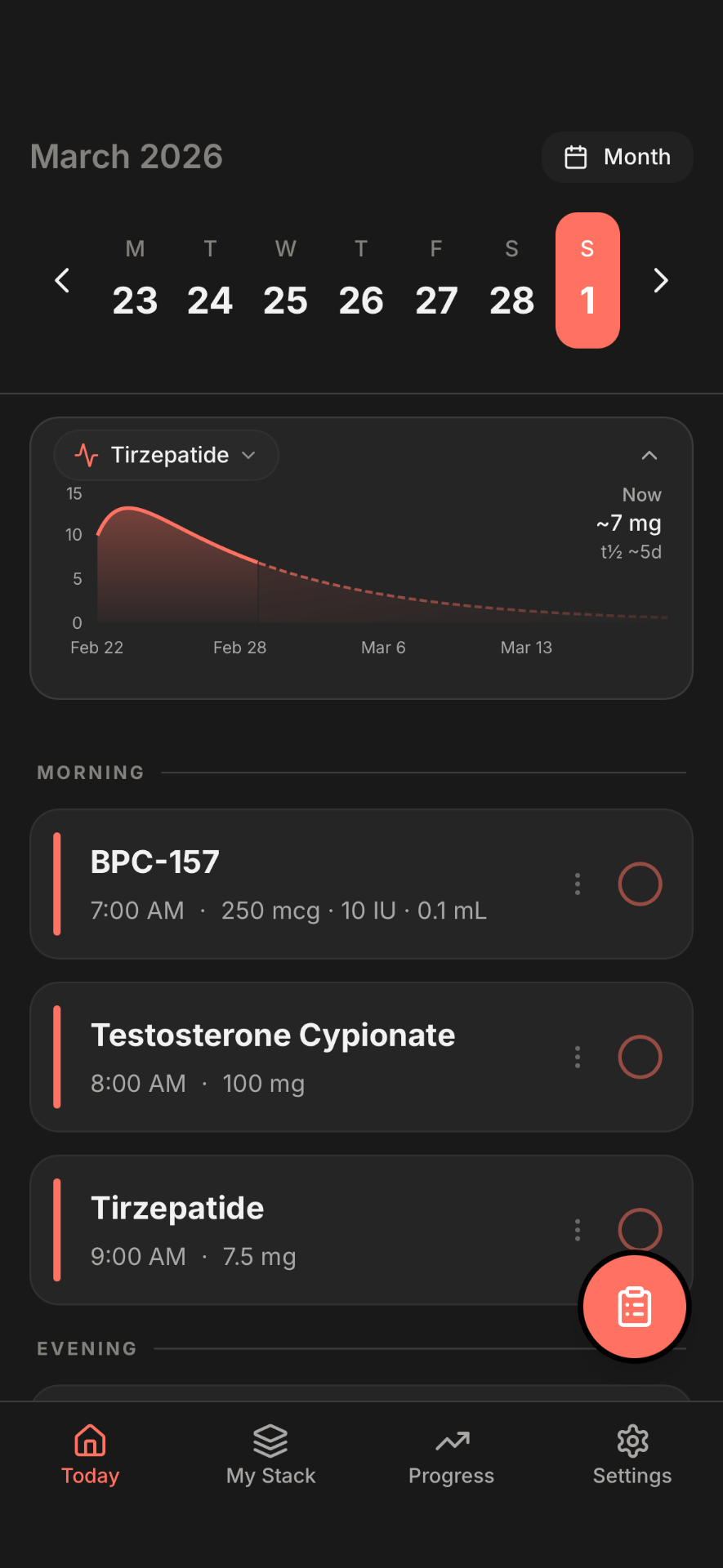
- Medication level curves for every compound
If Your GP Is Reluctant
Most GPs in New Zealand now have the authority and guidance to manage TRT. But some are still cautious, particularly with men under 40, or in areas where older referral habits persist.
If your GP declines to investigate or won’t initiate treatment despite clear symptoms and borderline labs, your options are:
Ask for a specialist referral. Your GP can refer you to an endocrinologist or urologist. Wait times vary by region: 2-6 months is common through the public system, but you can also see these specialists privately in Auckland, Wellington, and Christchurch with faster turnaround (usually within weeks).
Use a private men’s health clinic. A growing number of private clinics in New Zealand offer testosterone management directly. They can typically see you faster, are more flexible on injection protocols and monitoring frequency, and prescribe Depo-Testosterone if you want injections rather than gel. The consultation cost is higher (typically NZ$200-400 for the initial visit) but the prescription itself still runs through a normal pharmacy.
Testogel vs Depo-Testosterone: Which to Ask For
Both are Pharmac-funded. The practical difference:
Testogel (gel): Applied daily to shoulders or inner arms. Stable blood levels (no injection peaks or troughs). The main downside is transfer risk if skin contact occurs with a partner or child before it dries. Most NZ GPs default to gel because it is easy to initiate and adjust.
Depo-Testosterone (testosterone cypionate injection): Typically prescribed as once-weekly SubQ or once-every-two-weeks IM. More stable than biweekly, and many patients find injections more convenient than daily gel application. If you want injections, specifically request this and ask about weekly SubQ protocol.
Tracking Your Protocol
Whether you are on Testogel or Depo-Testosterone, the variables worth watching are the same: how you feel by day of week, energy levels, sleep quality, libido, and workout recovery. If you are on injections, logging dose and date against subjective energy scores makes peak-and-trough patterns visible, which gives you concrete data for your next GP review.
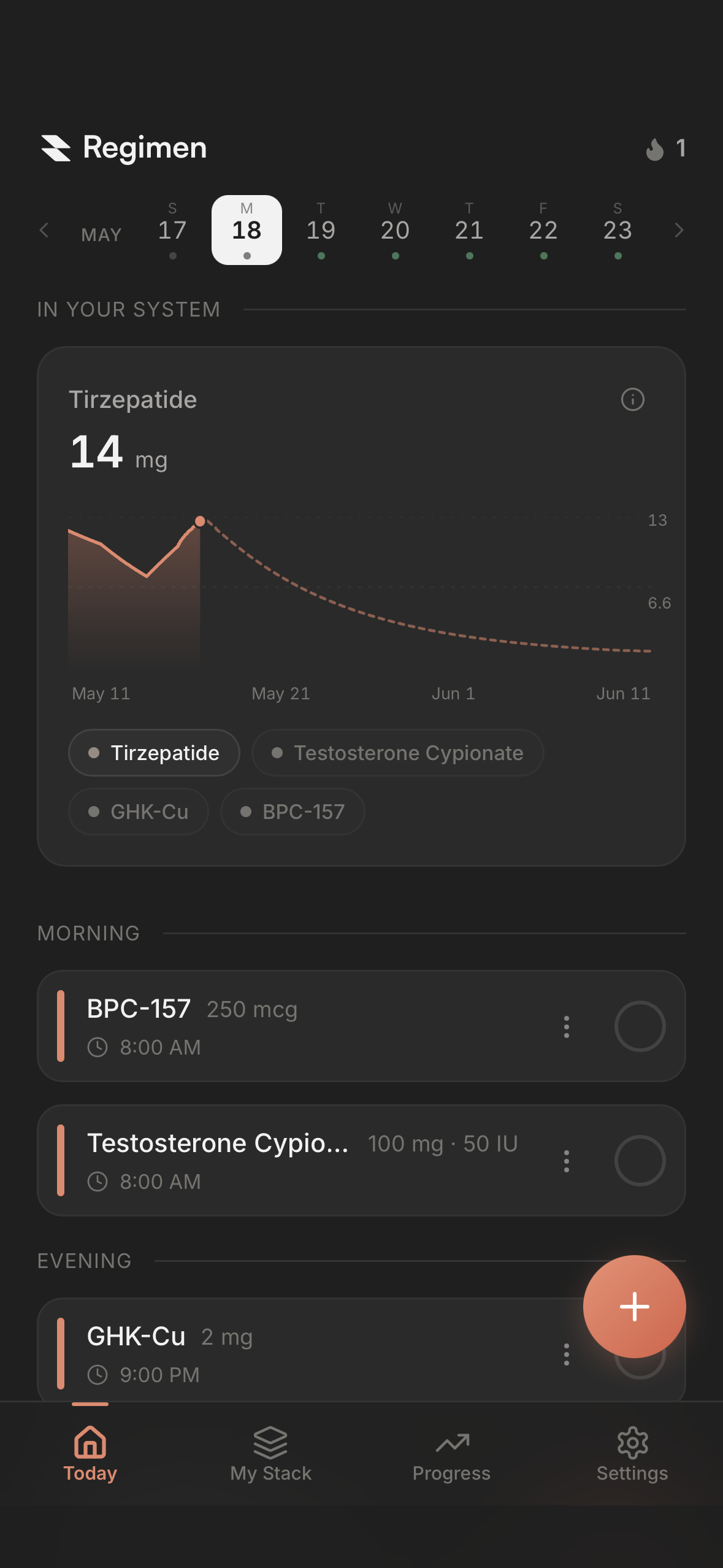
Regimen supports TRT tracking with dose logging, injection reminders, and daily markers. You can also cross-reference with your NZ GLP-1 protocol if you are running both: Ozempic and Mounjaro in New Zealand.
Frequently Asked Questions
Is TRT funded by Pharmac in New Zealand?
Yes. Testogel (testosterone gel) has been Pharmac-funded for any clinically relevant use since April 1, 2024. The co-pay is NZ$5 for a 3-month supply. Testosterone cypionate injections (Depo-Testosterone) are also funded. Testosterone cream and oral capsules are not funded for new patients.
Do I need a specialist referral to get TRT in New Zealand?
Not necessarily. Updated 2024 BPAC guidelines recommend that GPs manage TRT directly for straightforward cases. A GP can order confirmatory labs, diagnose hypogonadism, and initiate Pharmac-funded testosterone without a mandatory specialist referral. Specialist referral (endocrinologist or urologist) is recommended for complex presentations.
What testosterone level qualifies for TRT in New Zealand?
There is no single fixed threshold, but symptomatic hypogonadism with total testosterone consistently below 8-12 nmol/L on two morning blood tests is the typical clinical threshold for initiating TRT in New Zealand. LH, FSH, and SHBG are also considered alongside the total testosterone result.
How much does TRT cost in New Zealand with Pharmac funding?
With Pharmac funding, the cost is NZ$5 per prescription item. For Testogel, one prescription covers a 3-month supply. This is one of the most affordable TRT access pathways among English-speaking countries. Community service card holders may pay nothing.
Can I get testosterone injections instead of gel in New Zealand?
Yes. Depo-Testosterone (testosterone cypionate) injections are Pharmac-funded in New Zealand. You can request injections from your GP. Most GPs are comfortable prescribing weekly subcutaneous injections or fortnightly intramuscular injections, depending on your preference and clinical presentation.
Track your Testogel or Depo-Testosterone protocol with Regimen. Dose logging, injection reminders, daily markers. Free for one compound.
Regimen is a tracking tool, not a medical service. We do not provide medical advice. Always consult your healthcare professional before starting, changing, or stopping any medication protocol.