Verification note: Pharmac funding decisions, Special Authority criteria, and Medsafe approvals change frequently. Information here reflects publicly available data as of May 2026. Always verify current status at pharmac.govt.nz and medsafe.govt.nz before making treatment decisions.
New Zealand has a more specific stance on peptides than you might expect from reading Australian or UK forums. The rules here aren’t the same. If you have been applying advice from AU Reddit or UK biohacking communities directly to your NZ situation, there are some meaningful differences you should know about.
This isn’t a scare piece. Peptides are not controlled substances under NZ law. But the regulatory framework under the Medicines Act 1981 creates a grey zone for individual importers that is worth understanding clearly before you order anything.
How Medsafe Classifies Peptides
Medsafe is New Zealand’s medicines regulator, operating under the Medicines Act 1981. The key classification distinction is:
Prescription medicines: Require a prescription from a registered prescriber. Importing a prescription medicine without one is an offence.
Unapproved medicines: Not registered on the NZ Medicines database but may be imported under controlled circumstances (Section 29 of the Medicines Act allows prescribers to supply unregistered medicines in specific situations).
Research chemicals and cosmetics: Products not intended for human use (or only for topical cosmetic use) sit in a different category with less scrutiny.
Most injectable peptides fall into the ‘unapproved medicine’ category if imported for human use. This is where the grey zone lives.
Peptide-by-Peptide Status in New Zealand
| Peptide | Medsafe status | Practical picture |
|---|---|---|
| Melanotan I and II | Prescription medicines, import ban | Explicitly banned. Do not import. |
| BPC-157 | Unapproved medicine (if for human use) | Grey area. Customs can and does seize. |
| TB-500 | Unapproved medicine (if for human use) | Same status as BPC-157. |
| GHK-Cu (injectable) | Unapproved medicine (if for human use) | Grey area. |
| GHK-Cu (topical/cosmetic) | Cosmetic ingredient | Topical use is far less scrutinised. |
| Semax | Unapproved medicine | Grey area; rarely flagged at customs. |
| Selank | Unapproved medicine | Same status as Semax. |
| AICAR | Explicitly flagged by Medsafe | Higher enforcement attention than most. |
| Thymosin Alpha-1 | Unapproved medicine | Grey area. |
| Epithalon | Unapproved medicine | Grey area. |
| PT-141 (Bremelanotide) | Related to Melanotan, higher scrutiny | Treat as similar to Melanotan compounds. |
The key phrase throughout this table is ‘grey area.’ These compounds are not scheduled as controlled drugs under the Misuse of Drugs Act 1975. Possessing or using them is not a criminal offence in the same way that possessing methamphetamine or MDMA is. But importing them for human use crosses into unapproved medicine territory, and Customs NZ has the authority to seize packages.
What ‘Grey Area’ Actually Means in Practice
The NZ peptide community does import. Peptide packages arrive at NZ addresses regularly. But the risk profile is meaningfully different from the UK or Australia:
Customs seizure: NZ Customs is smaller than Australia’s border force but applies similar risk-based inspection criteria. Packages labeled ‘research chemicals’ or from known peptide suppliers are on the radar. Seizure rates are hard to quantify, but the NZ forum consensus is that seizures happen more frequently here than in the UK.
Legal consequence for the individual: If your package is seized, you typically receive a notice from Customs. There is no criminal prosecution for personal-quantity importation of unapproved medicines in the vast majority of cases. The compound is confiscated, not you.
Melanotan I and II are different: These are specifically listed as prescription medicines with an effective import ban. Don’t import these.
Ready to track your protocol?
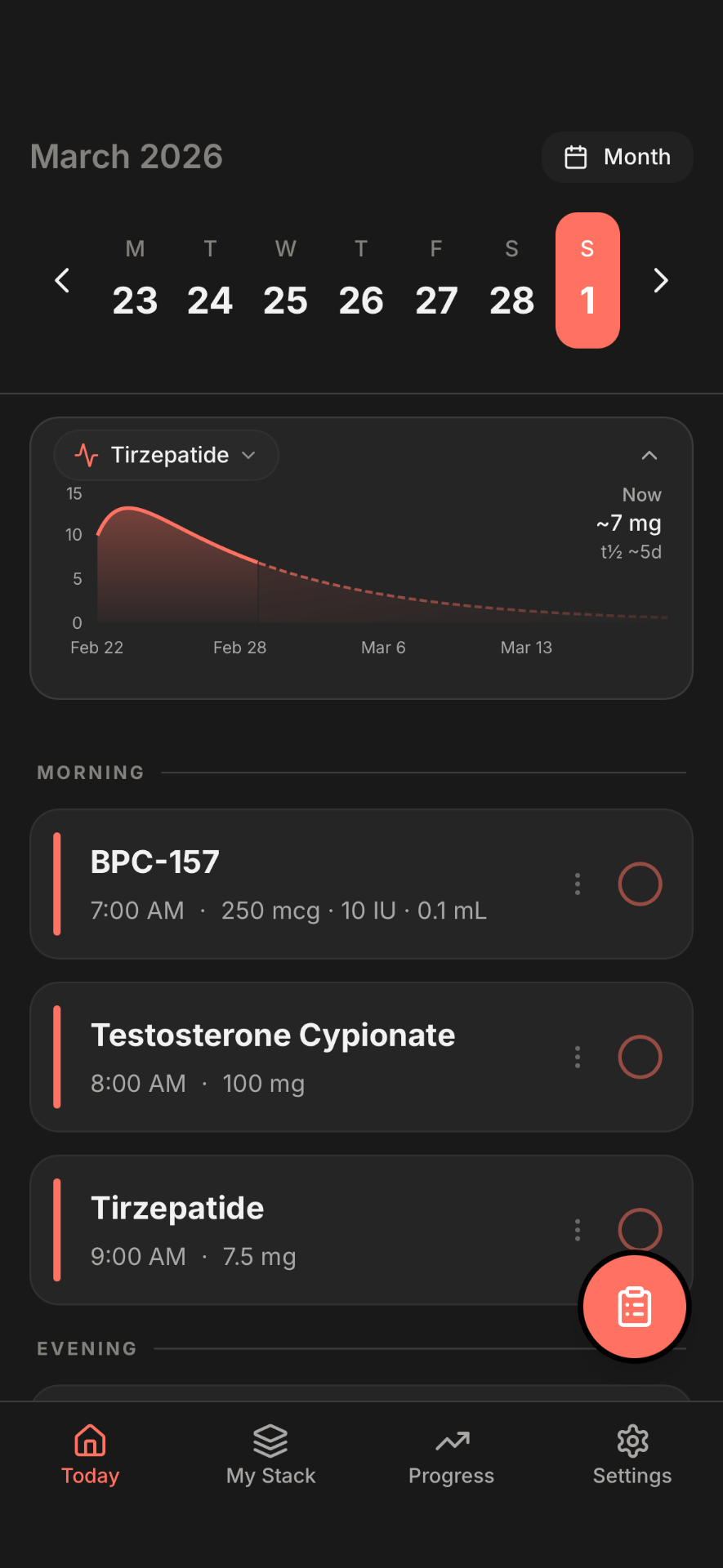
- Smart reminders so you never miss a dose
- Progress tracking with photos and weight
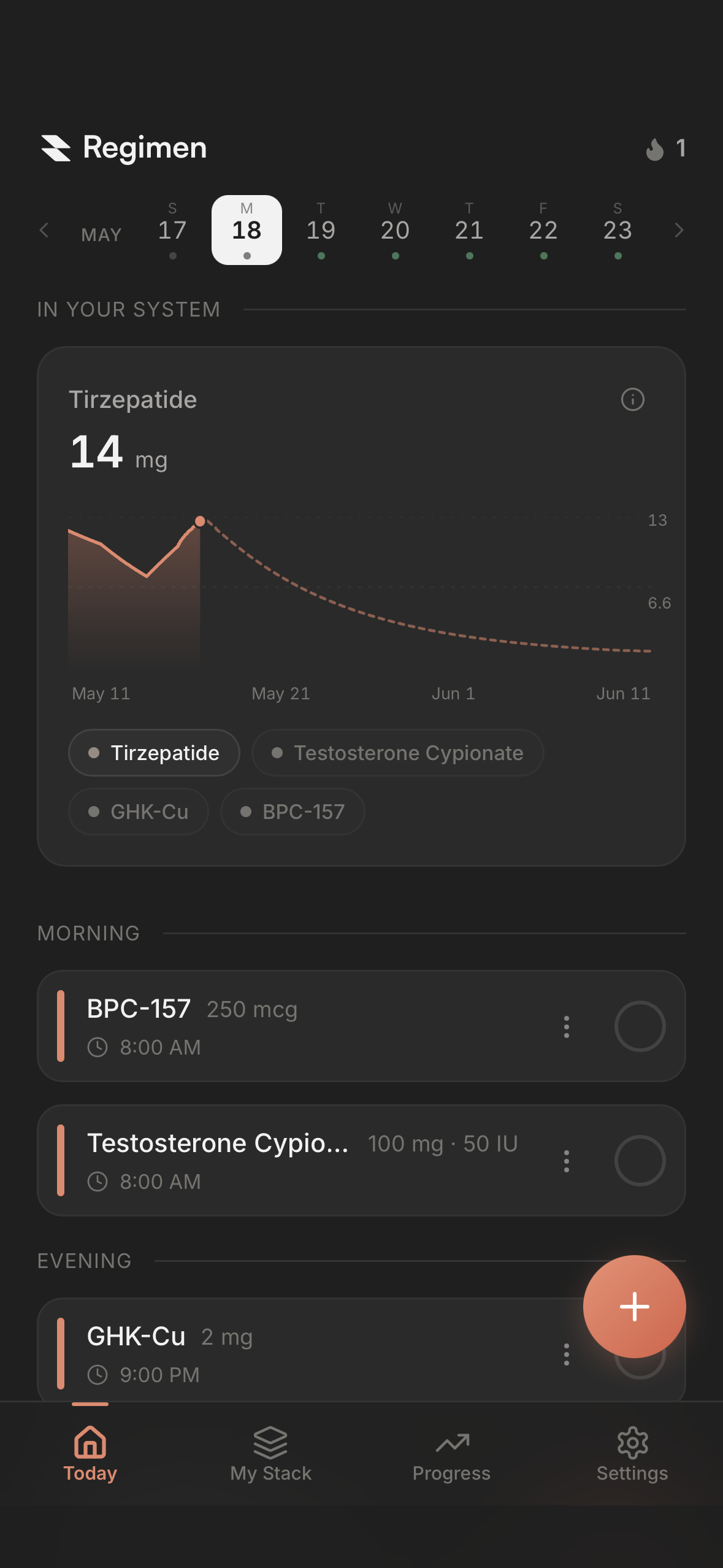
- Medication level curves for every compound
The Most Legitimate Route: Compounding Pharmacies with a Prescription
Some NZ compounding pharmacies will compound peptides (including BPC-157 and TB-500) with a valid prescription from a registered NZ doctor. This is the most legally clean path:
- Find a GP or specialist (private functional medicine doctors in Auckland are most likely) who is familiar with peptide protocols and willing to prescribe
- The GP writes a prescription under Section 29 of the Medicines Act (authority to prescribe unregistered medicines)
- A NZ compounding pharmacy prepares the peptide under pharmaceutical-grade conditions
- You receive the compound legally, compounded domestically, with known purity
This route costs more than ordering from an overseas supplier. A compounded BPC-157 vial from a NZ pharmacy will typically run NZ$80-200 depending on the pharmacy and dose. But you get pharmaceutical quality, no customs risk, and a legitimate prescription on file.
Storage and Safety Regardless of Source
Whether you are sourcing through a compounding pharmacy or importing, the storage and handling rules are the same:
Lyophilised (freeze-dried) powder: Store at -20°C (freezer). Stable for 12+ months if kept dry and away from light.
Reconstituted solution (mixed with BAC water): Store at 2-8°C (fridge). Use within 30 days. Do not freeze reconstituted peptide.
Reconstitution: Use bacteriostatic water (BAC water, 0.9% benzyl alcohol). Normal sterile water will degrade faster and doesn’t have the preservation properties of BAC water. The peptide reconstitution calculator handles the math: enter your vial size and desired concentration to get exact water volumes.
Sourcing quality check: Always request a Certificate of Analysis (COA) with third-party mass spectrometry or HPLC testing from any supplier. A legitimate supplier provides this without being asked. If a supplier doesn’t have it available, don’t use them. How to read a peptide COA walks through a report field by field.
If You’re Running Injectable Peptides
If you are on a BPC-157, TB-500, or other injectable protocol in New Zealand, dose and injection logging matters more than you might think. It helps you identify what is working, catch dosing errors, and build a coherent picture of how your protocol is affecting your training, recovery, and biomarkers over time.
The peptide reconstitution calculator takes care of the math before you inject. Regimen handles the tracking afterwards. For more on the NZ health landscape, the NZ TRT guide covers the testosterone side of things.
Frequently Asked Questions
Are peptides legal in New Zealand?
Peptides are not scheduled as controlled drugs under the Misuse of Drugs Act 1975. Possessing them is not a criminal offence in the way controlled drugs are. However, importing them for human use falls into ‘unapproved medicine’ territory under the Medicines Act 1981, which means Customs NZ can seize packages. Melanotan I and II are explicitly banned and should not be imported.
Can I order BPC-157 to New Zealand?
BPC-157 is not a controlled drug in New Zealand, but it is classified as an unapproved medicine if imported for human use. Customs NZ can seize packages. Some people do import without incident, but the risk is higher than in the UK or Australia. The cleanest legal route is a prescription from a NZ doctor and supply through a compounding pharmacy.
Which peptides are explicitly banned in New Zealand?
Melanotan I and Melanotan II are explicitly listed by Medsafe as prescription medicines with an effective import ban. AICAR has been specifically flagged by Medsafe. Most other peptides (BPC-157, TB-500, Semax, Selank, Epithalon) exist in a grey zone as unapproved medicines rather than explicitly banned substances.
Can a NZ doctor prescribe BPC-157 or TB-500?
Yes, under Section 29 of the Medicines Act 1981, a registered NZ prescriber can prescribe unregistered medicines in specific circumstances. Some private and functional medicine GPs in New Zealand are familiar with peptide protocols and can write a Section 29 prescription. A compounding pharmacy then prepares the peptide domestically.
How does New Zealand compare to Australia and the UK for peptide access?
New Zealand has tighter practical enforcement than the UK, where research chemical suppliers operate openly and enforcement against individual buyers has been minimal. That is not the same as legal: uncontrolled research peptides are not Misuse of Drugs Act offences in the UK, but selling them for human use still needs a medicines licence under the Human Medicines Regulations 2012, which is why they carry a research-use-only label. Australia’s TGA has a similar ‘unapproved medicine’ framework but a larger market means more supplier options. NZ sits between the two: not criminal-risk territory, but higher customs seizure risk than the UK and a smaller domestic compounding pharmacy market than Australia.
Track your BPC-157, TB-500, or other peptide protocol with Regimen. Reconstitution math, dose logging, injection reminders. Free for one compound.
Regimen is a tracking tool, not a medical service. We do not provide medical advice. Always consult your healthcare professional before starting, changing, or stopping any medication protocol.